Kaski – For those who like to walk, explore, and meet new people, every new place brings excitement.
The journey becomes more rewarding when it offers natural beauty, warm people, and a balanced trek.
Such is the route from Sikles to Kapuche.
Sikles village in Madi-1, Kaski, is an ideal place to experience rural hill life. Nature here reveals forms rarely seen elsewhere. The views leave lasting memories. With a camera, you can capture them forever.
Sikles lies about 17 kilometers from Pokhara, a two-and-a-half-hour drive. The village has around 800 households, mostly Gurung.
The locals welcome visitors with genuine warmth that even large hotels could learn from. The food tastes simple and good, adding to the comfort of the stay.
The trek from Sikles to Kapuche is memorable. The steep climbs tire the body, but the eyes stay alert to every scene. The beauty of Kapuche makes the effort worth it.
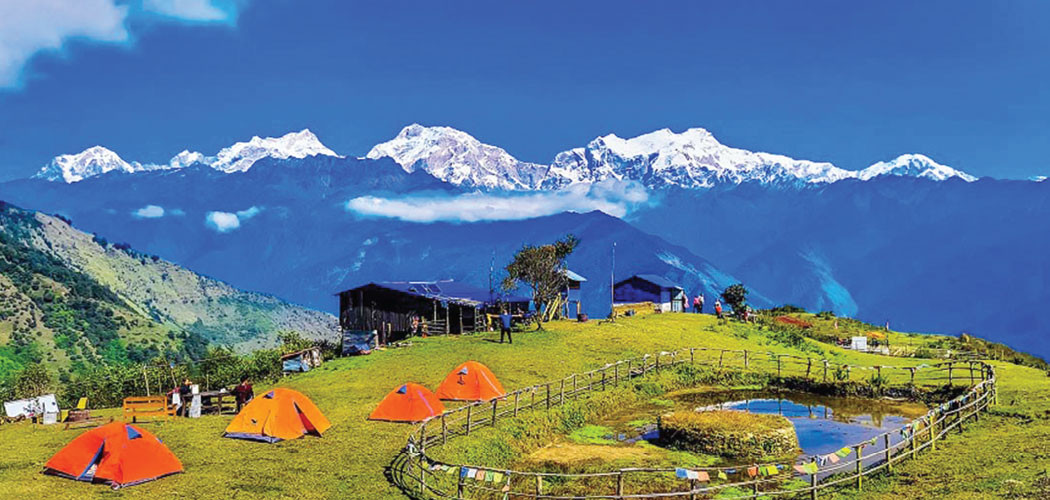
Kapuche Lake is known as the lowest-altitude glacial lake in the world. At sunrise, mist rising from the lake toward the Himalayas creates a view that looks painted by hand.
Kapuche is an emerging tourist site and a new trekking route. The lake lies at an altitude of 2,546 meters above sea level. From Sikles, it takes about eight hours of walking to reach Kapuche. After six hours, you arrive at Hugu village, also called Gothghar, the last settlement before Kapuche. From there, it is a two-hour uphill walk to the lake.

About fifteen years ago, Hugu had around fifteen sheep sheds. None remain now. Until three years ago, local resident Meja Gurung ran one but later shifted to the hotel business. He believes that a better-managed trail could draw many tourists.
The trail from Sikles passes through green fields, slopes, narrow paths, waterfalls, and streams. Every step offers a new sight and sound.
Avalanches sometimes add a rare thrill to Kapuche. The lake sits among mountains, hills, and forests.
In winter, it freezes solid. In summer, it flows calm and clear.
Green forests line its sides. Snowy peaks rise to the north. Hills and streams lie to the south. Kapuche greets visitors with its changing beauty and reminds them of the fragile balance of its mountain environment.


![From Sikles to Kapuche- the world’s lowest glacial lake [In Photos]](https://english.biznessnews.com/media-file/images/2025/10/1761325459-9fBP3.jpg)