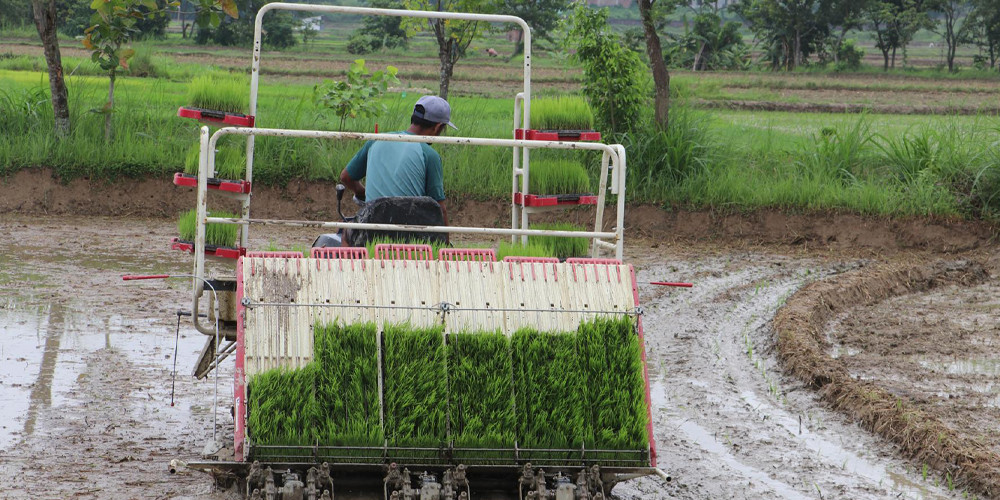

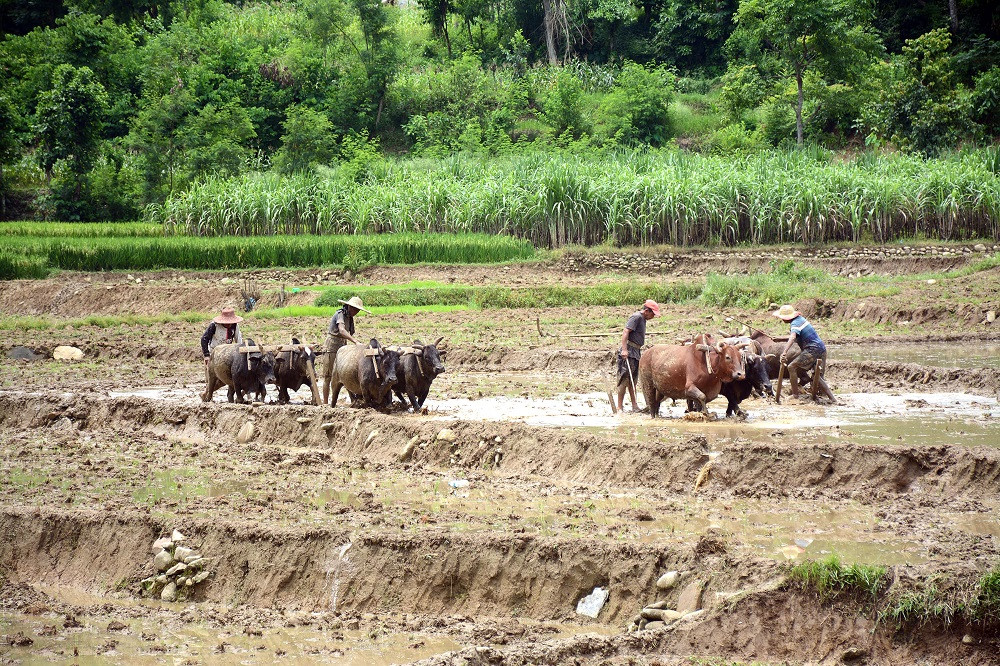
Kathmandu-National Paddy Day and the traditional dahi chiura festival are being celebrated across Nepal today with various events. Farmers are transplanting paddy while singing traditional Asare songs, and Nepalis from all walks of life are also marking the occasion by eating dahi chiura, a traditional dish of beaten rice and yoghurt.
Asar 15 in the Nepali calendar is traditionally observed as both the start of the paddy transplantation season and the festival of dahi chiura. Farmers have long followed the custom of eating the dish after hours of working in the fields, believing it helps cool the body and restore energy.
In Nepali culture, yoghurt symbolises good fortune. It is customary to eat yoghurt before setting out on an important journey, travelling, or leaving for abroad. People are also traditionally blessed with yoghurt and rice grains before departure. Both Ayurveda and modern nutritional science recognise yoghurt as beneficial for digestion, hydration, and overall health.
Ayurveda includes the saying, "Bhojanante pibet takram, vaidyasya kim prayojanam", meaning, "If one drinks buttermilk after a meal, there is little need for a physician." Dahi chiura is also widely believed to be beneficial in certain conditions, including diarrhoea.
Nepal has officially observed National Paddy Day since Asar 15, 2062 BS (2005). The annual observance was introduced following a ministerial decision on Mangsir 29, 2061 BS to highlight the importance of paddy cultivation.
In Nepal, where agriculture remains a key source of livelihoods, Asar is the main month for paddy transplantation. Farmers traditionally sing Asare folk songs while planting rice in muddy fields. Popular verses such as, "Chhupu ra chhupu hiloma dhan ropera chhodoula, banai kulo lagai pani aayera godoula", echo across the countryside. Splashing mud on one another during transplantation has also become an integral part of Nepal's rural tradition.
However, paddy transplantation has lagged behind schedule in many parts of the country this year because of insufficient rainfall by mid Asar. Farmers in some areas have also complained of a shortage of chemical fertilisers. The Ministry of Agriculture and Livestock Development, however, says adequate stocks of fertilisers are available.
As paddy is Nepal's staple crop, completing transplantation on time is considered crucial for agricultural production, food security,
© 2026 All right reserved to biznessnews.com | Site By : Sobij
© 2026 All right reserved to biznessnews.com | Site By : Sobij