
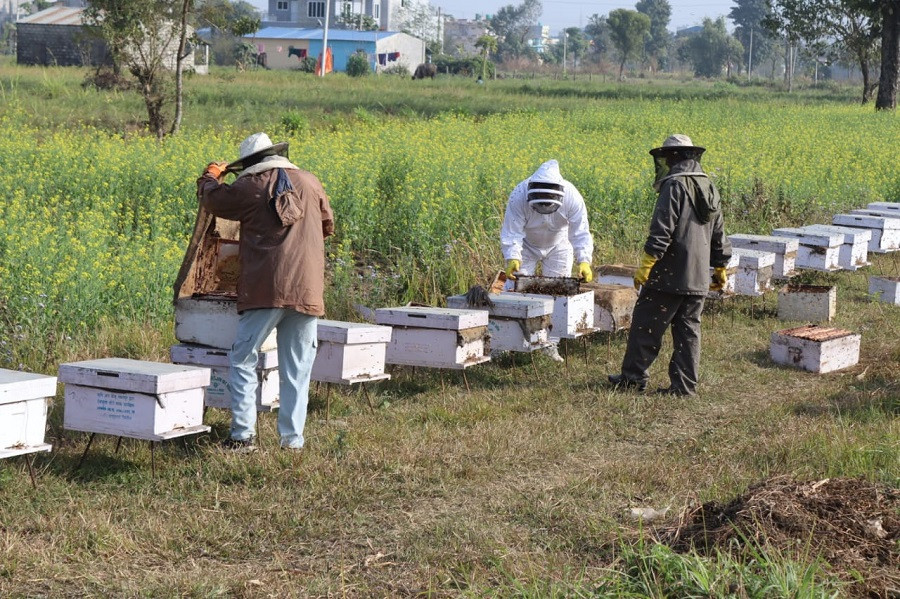
Kathmandu- Nepali beekeepers are grappling with a significant unsold stock of honey, totaling around 21 tonnes this year.
It is largely due to consumer distrust despite a healthy market demand. This figure, though substantial, is an improvement from the 69 tonnes that remained unsold last year.
The Federation of Nepal Beekeepers attributes the sales slowdown to insufficient market access. While last year saw some resolution following a meeting with Minister for Agriculture and Livestock Development Ram Nath Adhikari, which included Dabur Nepal purchasing a portion of the stock, beekeepers warn of an even larger surplus this year.
To combat the problem, Federation Chairperson Subas Chandra Ghimire organized a honey fair in Kathmandu. The event aims to educate consumers about Nepali honey and boost its marketability.
A key issue contributing to consumer disbelief is the natural crystallization of mustard honey, which bee expert Jagadish Bhakta Shrestha clarifies as a normal process, especially at temperatures below 13-14 degrees Celsius.
He also imformed that heating honey to prevent crystallization can diminish its nutritional value.
Shiv Prasad Sharma Paudel, outgoing president of the Nepal Bee Keepers Association, highlighted the ongoing struggle with honey's marketability, even leading beekeepers to consider abandoning the trade in previous years.
He emphasized the importance of consumer education, stating, 'We, as Nepali farmers, suggest buying the honey produced by us, as natural honey will crystallize, while honey that does not crystallize could be spurious.'
Fair participants, like Bikash Nepal of B and B Honey Firm, believe such events are crucial for marketing. However, Rajendra Gautam, former president of the Nepal Beekeepers' Association, pointed out the paradox of unsold stock despite Nepal's honey production not meeting its consumption needs.
He urged government assistance in marketing, stressing that 'Nepali honey is good in quality, but we have not been able to make consumers understand this; the misconception that honey is fake also creates problems in its marketing.'
Despite challenges in the domestic market, the international market for Nepali honey shows promise. Sujan Amgai, head of the Honey Development Centre in Bhandara, reported over Rs 50 million worth of honey exported annually, indicating significant export potential if production meets international standards.
Beyond marketing, beekeepers face dwindling forage for their bees due to increased pesticide use and fees for bee conservation.
Additionally, many individual farmers struggle to directly sell their honey due to the need for a government food license and processing units.
Januka Thapa, president of the Nepal Beekeeping Central Cooperative Association, emphasized the need for beekeeping farmers to unite for effective marketing.
The ongoing Honey Festival at Bhrikuti Mandap features 40 stalls showcasing various honey products, beekeeping equipment, and educational materials. Farmers from all seven provinces are participating, and discussions on beekeeping technologies and different bee species are also part of the event.
According to Subash Chandra Ghimire, coordinator of the Honey Fair, farmers affiliated with the federation produced 226 tonnes of honey this year. Nepal is home to 12,138 colonies of the Serena bee and 6,500 colonies of the Mellifera bee, with 711 and 270 affiliated farmers raising them, respectively.-RSS
© 2026 All right reserved to biznessnews.com | Site By : Sobij
© 2026 All right reserved to biznessnews.com | Site By : Sobij