
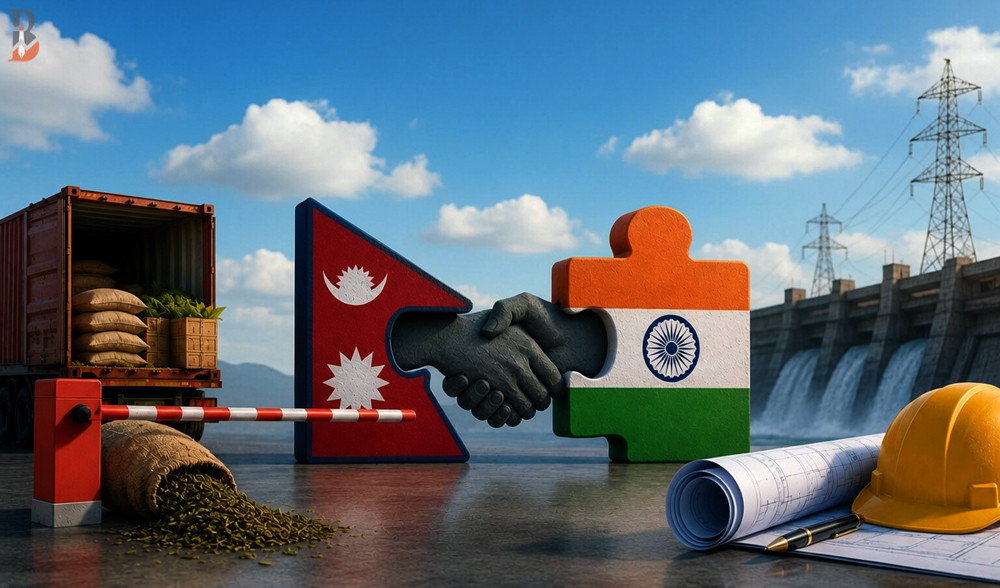
Kathmandu-When diplomatic relations become strained, the first signs often appear in economic activities. Experts say this has often been the case in Nepal's relationship with India. When tensions or dissatisfaction emerge, they frequently show up in customs procedures or trade activities.
The latest tensions began after Nepal tightened regulations in markets along the Indian border.
The situation worsened when visits by senior Indian officials to Nepal were cancelled. Although relations appeared to improve after the visit of ruling party leader Ravi Lamichhane to India and the subsequent visit of Foreign Minister Shishir Khanal, the impact did not appear in customs and trade. Instead, the problems have become more serious.
India's restrictions on the import of Nepali tea have forced tea factories in Nepal to shut down. Tea exports have come to a standstill after India blocked imports. India has imposed similar barriers from time to time in the past, but this time the crisis has become much deeper.
The issue is not limited to tea. Recently, Indian investors who had already committed to investing in Nepal have also started reconsidering their plans.
After the Rastriya Swatantra Party government came to power, it pushed for a higher share of free electricity from hydropower projects. Indian investors became dissatisfied with this move. The Indian side believes the Nepali government is placing unnecessary pressure on projects even though agreements had already been reached.
Indian state owned company NHPC is preparing to invest in three major hydropower projects with a combined capacity of 1,730 megawatts. These include the 800 MW West Seti project, the 450 MW Seti River 6 project, and the 480 MW Phukot Karnali project. NHPC has warned that the free electricity provision could reduce financial returns and may force it to reconsider its investment plans.
According to source at the Ministry of Energy, the Indian side became unhappy after the Nepal government started strictly enforcing the provision that requires developers to provide 21.9 percent free electricity, as stated in agreements and memorandums of understanding. NHPC has warned that if it must continue providing free electricity at this level, the projects may no longer be financially viable and investment could be at risk.
India argues that the same free electricity rate should not apply to every project. Indian officials say each project has a different cost structure. Applying the same percentage everywhere could reduce returns and discourage investment. India has indicated that it will not move ahead with large investments unless Nepal provides a clear compensation mechanism through tax benefits, royalty adjustments, VAT measures, or other incentives.
India remains the main market for Nepal's electricity exports. India also does not purchase electricity from projects that involve investment from third countries, making Indian investment particularly important for Nepal. While the government says it wants to transform Nepal into a country that exports computing services rather than only energy, major hydropower projects already in the pipeline now face growing investment risks.
India's warning that it could withdraw investment and its restrictions on Nepali tea imports suggest that tensions in Nepal India relations may be increasing.
© 2026 All right reserved to biznessnews.com | Site By : Sobij
© 2026 All right reserved to biznessnews.com | Site By : Sobij