

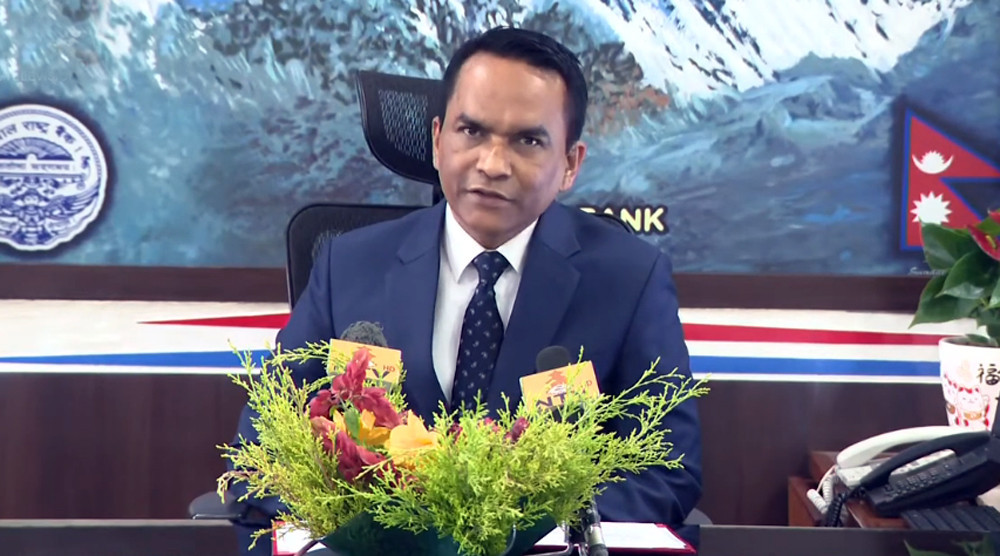
Kathmandu-The Nepal Rastra Bank (NRB) has unveiled a flexible monetary policy for fiscal year 2026/27, aiming to keep inflation within 5.5 per cent while supporting economic growth through institutional reforms, lower banking costs and easier access to credit.
Announcing the monetary policy on Tuesday, NRB Governor said the central bank has retained an accommodative policy stance as the economy continues to recover amid ample liquidity, moderating interest rates and improving economic activity.
The central bank projects inflation to remain at 5.5 per cent during the fiscal year, despite some upward pressure from higher global fuel prices caused by geopolitical tensions in West Asia. It said the recent ceasefire in the region is expected to ease inflationary pressures.
The monetary policy projects private sector credit to expand by 11 per cent and broad money supply to grow by 14 per cent in the current fiscal year.
To reduce the cost of financial intermediation, the NRB has proposed a series of institutional reforms for banks and financial institutions. These include reclassifying banks according to the size and nature of their business, promoting specialised banking services, allowing greater flexibility in opening and closing branches and encouraging wider adoption of digital financial services.
The central bank said these measures are intended to lower operating costs for banks, with the resulting savings expected to be passed on to borrowers through cheaper lending.
The policy also seeks to strengthen governance in the banking sector by tightening rules on personal guarantees for institutional borrowers, ending the practice of imposing unlimited personal liability on promoters and directors.
In addition, the NRB plans to reduce the number of individuals placed on the banking blacklist, introduce measures to manage non performing loans in sick industries and create new mechanisms to revive stressed loans.
To safeguard depositors, the central bank said it would strengthen institutions that accept public deposits. It also pledged to prevent deposit interest rates from falling excessively, even if economic conditions allow further declines. Under the policy, the NRB will absorb excess liquidity at its own cost by paying interest, helping maintain reasonable returns for depositors.
The central bank said the policy is designed to ensure that depositors, borrowers, businesses and disadvantaged groups can access secure savings facilities and affordable credit under fair conditions.
The NRB expects liquidity conditions to remain comfortable despite higher credit demand. It said remittance inflows, tourism earnings and increased government spending are likely to inject sufficient liquidity into the financial system as economic activity improves.
The central bank has left key monetary policy instruments unchanged. The policy rate, standing deposit facility rate and bank rate remain unchanged, while the existing provisions relating to the cash reserve ratio, statutory liquidity ratio and standing liquidity facility have also been retained.
© 2026 All right reserved to biznessnews.com | Site By : Sobij
© 2026 All right reserved to biznessnews.com | Site By : Sobij