
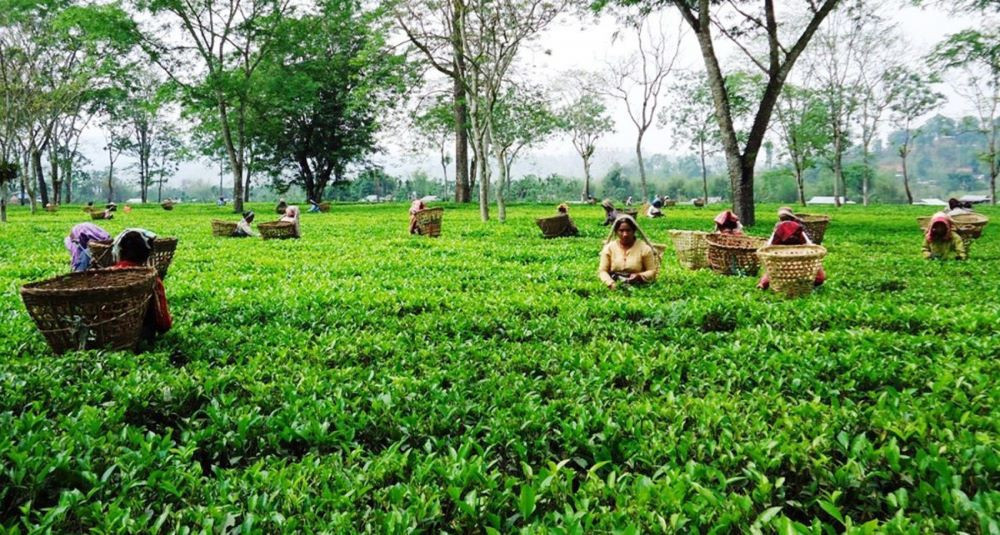
Kathmandu-Nepali tea manufacturers and farmers have welcomed the Indian government's decision to adopt a risk-based testing system for imported tea, a move expected to significantly ease exports from Nepal.
According to a circular issued by the Food Safety and Standards Authority of India (FSSAI) on June 23, 2026, only 20 percent of imported tea (HSN 0902) will now be selected randomly for testing under a risk-based system. The new provision has come into immediate effect at all customs checkpoints across India.
Previously, every consignment of Nepali tea underwent mandatory testing, resulting in lengthy delays, increased paperwork, higher costs, and uncertainty for exporters. The new system is expected to streamline customs clearance and facilitate smoother trade.
The decision follows a June 16 meeting chaired by India's Commerce Secretary, during which officials agreed to introduce risk-based testing for tea imported for domestic consumption. The revised system has now been implemented through India's new risk management framework.
In recent months, exports of Nepali orthodox and CTC tea were disrupted after the Tea Board of India and related agencies introduced additional testing requirements and administrative procedures. The delays caused tea shipments to remain stranded at the border, resulting in financial losses for exporters and affecting tea quality.
The prolonged disruption forced tea industries in Ilam to shut down from June 15, followed by factories in Jhapa from June 16. The closures impacted thousands of workers, while tea farmers were unable to sell freshly harvested green leaves. Industry representatives urged the Nepalese government to initiate diplomatic talks with India to resolve the issue.
Following several rounds of discussions involving the Nepalese government, tea entrepreneurs, and Indian authorities, an agreement was reached, allowing the closed factories to resume operations.
Tea producers and exporters believe the new 20 percent risk-based testing system will play a crucial role in removing long-standing export bottlenecks. Under the previous system, mandatory testing of every shipment led to significant border delays, increased costs, and deterioration in tea quality.
However, industry stakeholders have stressed the need for effective implementation of the latest decision. They noted that despite similar directives in the past, the Tea Board of India had continued the practice of testing all consignments. Exporters are optimistic that the latest order will be enforced, particularly as Indian buyers have shown renewed interest in purchasing Nepali tea.
India remains Nepal's primary transit route for exports of orthodox and CTC tea to international markets. As a result, changes in India's import policy have a direct impact on Nepal's tea sector, which supports thousands of farmers and dozens of tea-processing industries in Jhapa, Ilam, Panchthar, Dhankuta, and Tehrathum.
Stakeholders have described India's latest move as a positive step and have called for its consistent implementation. They believe that if the 20 percent risk-based testing system is applied in practice, it will remove a major obstacle to Nepali tea exports.
Tea industrialists have also urged the Nepalese government to continue engaging with Indian authorities to establish a long-term, predictable, and permanent framework for Nepali tea exports.
© 2026 All right reserved to biznessnews.com | Site By : Sobij
© 2026 All right reserved to biznessnews.com | Site By : Sobij