
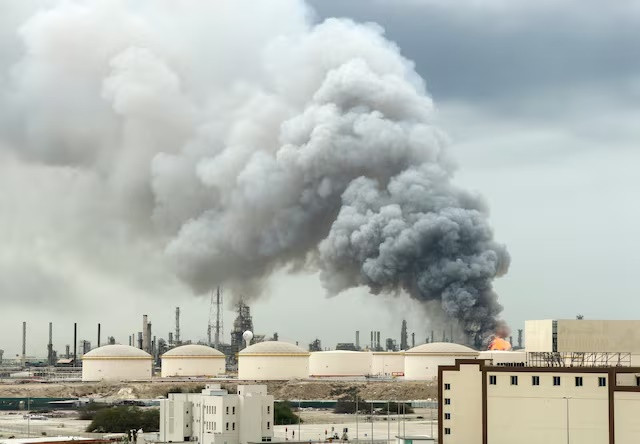
Kathmandu-The war and instability in West Asia, triggered after the United States and Israel launched attacks on Iran, are affecting hundreds of countries. Even nations with no direct involvement in the conflict are facing its consequences.
Energy prices have surged globally, and supply chains have been disrupted. This has reached everyday households, raising the cost of living. Inflation is affecting production systems, while jobs and public life are starting to feel the strain.
Nepal has already begun to face multi-dimensional impacts of the conflict. The effects are visible even in household kitchens.
Iran’s obstruction in the Strait of Hormuz, a key route for petroleum transport, has disrupted fuel supplies to India. Rising instability has also increased insurance premiums, pushing up costs. As fuel prices climb, inflation continues to rise.
The first visible impact has been a shortage of cooking gas. India imports a significant portion of its gas through the Hormuz route, around 30 to 40 percent. With that route disrupted, India is facing shortages, which has directly affected Nepal.
Since last week, Nepal has started distributing gas cylinders in half quantities. Even then, people are struggling to obtain them despite long queues.
Price increases are another major blow. Nepal Oil Corporation raised petrol prices by Rs 15 per litre on Sunday. Diesel prices have also gone up.
When fuel prices rise in the international market, the impact reaches Nepal. Higher fuel costs do not remain limited to energy alone. They affect production and transportation, pushing the entire economy into an inflationary cycle.
Another major concern is livelihoods. Many Nepalis work abroad in countries now under threat. Missiles are falling in places where large numbers of Nepali migrant workers live.
Countries like the UAE, Saudi Arabia, and Qatar, which are US partners, have been targeted by Iran through missile and drone attacks.
As a result, Nepali workers are feeling increasingly unsafe. If the war continues, many may be forced to return home. This could have long-term consequences for Nepal’s economy and society. The longer the war lasts, the deeper its impact will be.
© 2026 All right reserved to biznessnews.com | Site By : Sobij
© 2026 All right reserved to biznessnews.com | Site By : Sobij