
Kathmandu – How much does a SIM card cost? Fifty, sixty, o a hundred rupees, or perhaps little more?
In reality, once taxes are paid, the landing cost of an imported SIM card is just Rs. 62 to Rs. 65.
Since SIM cards are classified as an essential service item, the government has provided tax concessions on their import.
Surprisingly, a company without permission to import SIM cards has declared the purchase price of each card at 2,300 Chinese yuan. Such abnormal pricing by Cimex Inc. Pvt. Ltd., which lacks import authorization, strongly suggests that foreign currency is being siphoned out of Nepal.
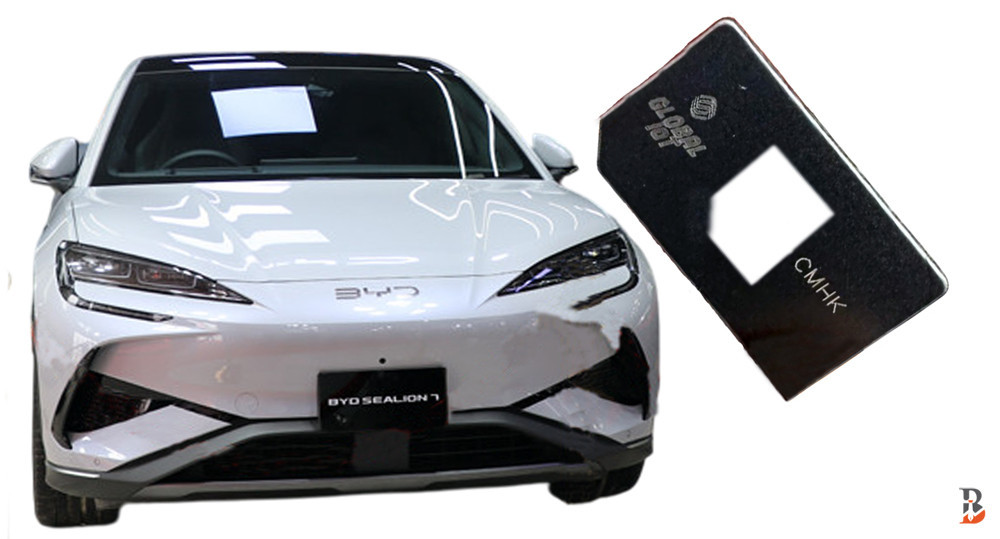
Even in Hong Kong, the price of a SIM card from China Mobile Hong Kong (CMHK) generally ranges from 30 to 200 Hong Kong dollars, with certain call or data packages included. If purchased without any package, the price of a SIM card naturally comes to less than 30 Hong Kong dollars.
Cimex, however, has imported CMHK SIM cards under an HS code which shows their declared import value as 2,300 yuan per SIM—equivalent to Rs. 44,022—thereby transferring large sums of foreign currency to China.
By declaring such inflated values, Cimex Inc. has been effectively exporting foreign exchange out of Nepal.
With the import of thousands of SIM cards to date, the company has funneled out tens of millions of rupees’ worth of foreign currency. Even if only 1,000 SIM cards were imported, Cimex Inc. would already have exported more than 2.3 million yuan from Nepal to China.
Since Cimex has not obtained authorization from the Nepal Telecommunications Authority (NTA) to import SIM cards, this activity is illegal. Furthermore, the company did not secure foreign exchange settlement facilities for the funds it remitted to China.
According to its stated purpose, Cimex Inc. is authorized to import vehicles and vehicle-related goods of BYD, but not SIM cards or telecommunications equipment.
It is therefore apparent that Cimex has misused the foreign exchange settlement facility provided for vehicle imports to bring in SIM cards.
This raises serious questions: how was Cimex—official dealer for BYD in Nepal—able to obtain settlement facilities for importing SIM cards, an item not included in its company objectives or import license?
Despite millions of rupees being siphoned abroad under this scheme, the Department of Customs, the Nepal Telecommunications Authority, and the Nepal Rastra Bank have so far remained silent.
Cimex has been importing China Mobile Hong Kong SIM cards under the same HS code used for mobile SIM cards.
For SIM cards used in telecommunications, the government has kept import taxes low. No customs duty is levied, and only 10 percent excise duty and 13 percent VAT are applied.
However, Cimex declared the purchase price of each SIM card at 2,300 yuan in customs documentation.
At the declared exchange rate of 19.14, this equals Rs. 44,022 per SIM. With insurance, freight, and taxes included, the landed cost of each SIM card in Nepal comes to Rs. 58,587.
Under the same customs subheading (8523.52.10), Nepal Telecom and Ncell have been importing SIM cards at only Rs. 62 to Rs. 65 each, including customs charges. The price declared by Cimex for SIM cards under the same HS code is thus clearly abnormal.
Even so, customs authorities have been approving these imports without question. As a result, Cimex has been openly channeling foreign exchange out of Nepal.
By showing documentation for GSM device imports, Cimex has managed to bring in SIM cards, but the NTA has also shown no concern. While Cimex has been selling active China Mobile Hong Kong SIM cards in Nepal as an 'official distributor,' regulatory agencies have remained silent.
Moreover, the approval for GSM device imports was not obtained by Cimex but by Delcon Compliance Pvt. Ltd
. BYD Auto Industry Company Limited’s GSM device import permit was granted to Delcon. Thus, even GSM devices are not permitted for import by Cimex, as only Delcon is authorized to receive foreign exchange settlement facilities for that purpose.
By exploiting this device import approval, Cimex has illegally imported active SIM cards of a foreign telecom company—thereby also transferring Nepali users’ data to China.
Instead of paying only 30 to 50 Hong Kong dollars for a SIM card, Cimex has been paying 2,300 yuan per card, thereby transferring more than 2,200 yuan per SIM unnecessarily. This is a clear case of foreign currency misappropriation, punishable under the Foreign Exchange (Regulation) Act, 2019.
Because foreign currency is involved in import transactions, foreign exchange laws apply. Importers must use foreign currency settlement facilities only for the specific items for which they were obtained.
Since Cimex used funds allocated for vehicle imports to bring in SIM cards, this constitutes misuse of foreign exchange.
The Foreign Exchange (Regulation) Act prescribes both fines and imprisonment for individuals or companies engaging in such illegal activities. The Nepal Rastra Bank monitors such activities and recommends legal action.
The Act states: 'If foreign exchange is obtained for a specific purpose or under certain conditions, it must not be diverted to other uses, nor should those conditions be violated.'
Therefore, Cimex Inc.’s SIM card imports are deemed unlawful, as they contravene stated objectives. During customs clearance, importers are obliged to provide accurate details of goods being imported.
The fact that SIM cards—a restricted item—have been imported under the guise of vehicle parts or other items demonstrates misdeclaration.
Under the Customs Act, 2007, such unauthorized imports can lead to confiscation of goods and fines equal to their value. Additionally, the import license of the company involved can be revoked.
© 2026 All right reserved to biznessnews.com | Site By : Sobij
© 2026 All right reserved to biznessnews.com | Site By : Sobij