
Kathmandu-Nepal’s telecom market is shifting from voice calls to data. For Nepal Telecom and Ncell, expanding data services has become critical but increasingly difficult.
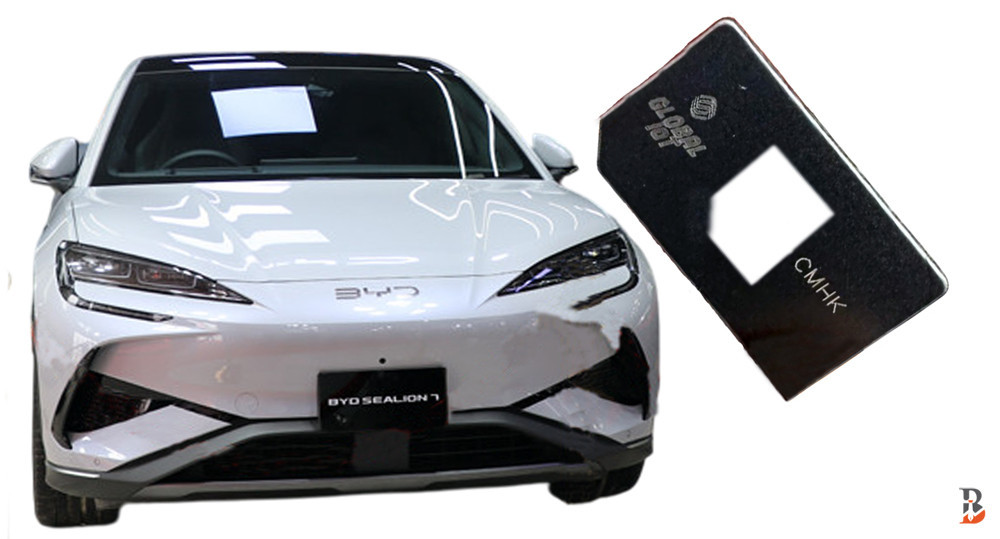
At the same time, active SIM cards from a Chinese telecom company are being illegally imported and used in electric vehicles, weakening local operators.
BYD’s authorized distributor in Nepal, Cimex Inc Pvt Ltd, has been importing active SIM cards from China Mobile Hong Kong Limited for use in BYD vehicles. This practice has diverted data revenue worth millions of rupees each year away from Nepali telecom companies.
Cimex imported the SIM cards under the customs subheading for SIM cards, which carries no customs duty. Only excise duty and VAT apply. Each SIM card was invoiced at 2,300 Chinese yuan, according to a bill issued on April 29, 2025. This price is unusually high. Customs data show that SIM cards typically enter Nepal at an average cost of Rs 60 to Rs 62 per unit, including taxes. This has raised suspicion that data charges may have been paid under the SIM card HS code.
Regulators have remained silent while Cimex imports and sells active foreign SIM cards in the name of software updates. Services meant for personal roaming use are effectively being sold commercially.
Nepal has around 15,000 BYD electric vehicles on the road. If each vehicle used a Nepali SIM and spent Rs 200 per month on data, the annual business would run into millions of rupees. With about 3,000 new BYD vehicles entering the market each year, this data business could steadily grow. Instead, revenue is flowing abroad, while Nepal Telecom and Ncell continue to lose market share.
Nepali telecom companies are already under severe financial stress. Revenue has fallen sharply. Investment in new infrastructure has slowed. New business areas have failed to emerge.
Telecom officials warn that this issue extends beyond vehicles.
Machine to machine connectivity will soon become standard, and SIM cards will be essential.
Allowing foreign SIMs in such services sends business abroad while Nepal collects only limited taxes and royalties. Data privacy is another concern, since foreign SIMs place user data beyond Nepal’s control.
Four months ago, Nepal Telecommunications Authority spokesperson Min Prasad Aryal said there is no legal basis for vehicle dealers to import and sell foreign active SIM cards.
He stated that such activity is not envisioned under existing law and requires urgent review.
So far, the NTA has not concluded whether the SIM cards imported by Cimex are legal, whether their declared value is genuine, or whether data payments were disguised as SIM imports.
The regulator says its study is ongoing, with no final decision yet.
China Mobile Hong Kong Limited
China Mobile Hong Kong Company Limited, CMHK, is a subsidiary of China Mobile. Established in 1994, CMHK has been providing telecom services in Hong Kong since January 1997. CMHK is currently the largest telecom service provider in Hong Kong.
CMHK provides mobile telephony, internet services, and broadband services. China Mobile, also known as China Mobile Limited, is fully owned by China Mobile Communications Group Company Limited. The company is wholly owned by the Chinese government.
China Mobile’s network operates in China and Hong Kong. China Mobile is the largest wireless carrier in China. As of June 2021, it had more than 945.5 million subscribers.
China Mobile is listed on the Shanghai Stock Exchange and the Hong Kong Stock Exchange. It is the world’s largest telecommunications service provider in
© 2026 All right reserved to biznessnews.com | Site By : Sobij
© 2026 All right reserved to biznessnews.com | Site By : Sobij