
Kathmandu-A major breakthrough for Nepal’s energy sector with the most anticpated 1,200 MW Budhigandaki Project is finally back on track.
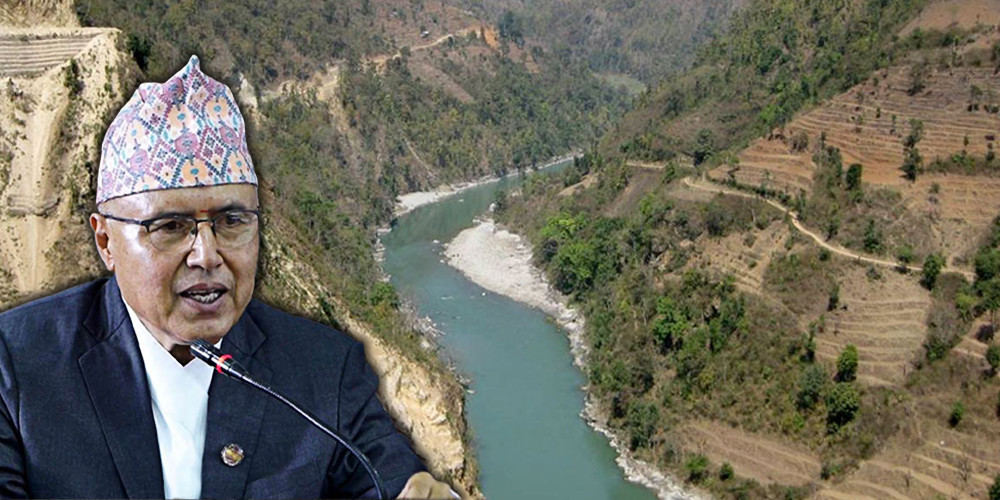
With the Finance Minister Rameshwar Khanal's initiative, the project's new investment modality received Cabinet approval today, ending years of uncertainty for this National Pride Project.
The project's modality, which had previously stalled during the tenure of then-Finance Minister Bishnu Paudel, was proactively advanced by current Finance Minister Khanal through his keen interest and subsequent approval. With this development, the National Pride Project, which had been in a state of uncertainty for a long time, has once again entered the implementation phase.
According to the agreement from the Finance Ministry, funds collected through an infrastructure tax on petroleum products will be allocated to the Budhigandaki project.
Additionally, it has been confirmed that an extra amount will be invested through infrastructure tax over the next eight years, along with investment from the Electricity Authority and public share issuance, totaling Rs 420 billion. This funding modality will be submitted to the Cabinet for further approval.
So far, approximately Rs 39 billion has been spent on compensation for those affected by the project. An additional Rs 80 billion will also be invested in the project.
Preparations are underway to implement the project with an annual budget of around Rs 22 billion over the next eight years.
The project, located in Dhading and Gorkha, has an estimated base cost of $2.77 billion (about Rs 374 billion). The construction period is expected to last eight years. Including interest during construction of Rs 32 billion, the total cost will reach Rs 406 billion. The debt-to-equity ratio is set at 70:30. The promoter company, Budhigandaki Company Limited, will have 80 percent government ownership and 20 percent ownership by the Nepal Electricity Authority (NEA).
Upon completion, a portion of shares may be offered to the public to reduce borrowing or restructure government ownership. The government will invest Rs 97.47 billion as equity and Rs 150 billion as concessional loans, amounting to a total of Rs 248 billion. The Rs 45 billion already invested will be converted into equity.
Customs and VAT revenue linked to the project will be considered part of the government's investment. Fifty percent of the infrastructure tax collected on petroleum imports will be allocated to the project. After deducting prior spending, the government must secure Rs 228 billion for its share.
The NEA will invest Rs 24.37 billion in equity. To reduce financing costs, a Rs 30 billion energy bond will be issued, which banks, insurance companies, and public funds can purchase. Banks will provide Rs 104 billion in loans.
Entities such as the Employees Provident Fund, Citizen Investment Trust, Social Security Fund, insurance companies, HIDCL, Nepal Telecom, and commercial banks will participate in co-financing.
The project will generate 1.41 billion units in winter and 1.97 billion units in the rainy season, totaling 3.38 billion units annually. The proposed power purchase rates are Rs 12.40 per unit in winter and Rs 7.10 per unit in the rainy season. Projected annual revenue will reach Rs 31.48 billion. The generation license period is 50 years, and if construction is completed in eight years, power generation will continue for 42 years.
Work on the detailed project report and tender documents is nearing completion, with land acquisition reaching about 90 percent. Compensation of Rs 42.65 billion has been paid for land, structures, and crops. The project will physically and economically affect 8,117 households in Gorkha and Dhading, of which 3,560 households will be fully displaced.
Situated close to key load centers such as Kathmandu, Chitwan, and Pokhara, the project will involve the construction of a 263-meter concrete arch dam on the Budhi
Gandaki River.
Fourteen former Village Development Committees (VDCs) in Dhading and thirteen in Gorkha will be impacted. The reservoir will cover 63 square kilometers, creating opportunities for employment, business, tourism, and fisheries, while also benefiting downstream areas. The maximum water level will be 540 meters.
© 2026 All right reserved to biznessnews.com | Site By : Sobij
© 2026 All right reserved to biznessnews.com | Site By : Sobij