Kathmandu- Nepal’s only billionaire, Binod Chaudhary, is back in the spotlight, this time over his banking deals.
Known for navigating legal loopholes to grow his empire, Chaudhary’s recent moves in Sri Lanka’s banking sector are raising questions about potential misuse of Nepal’s banking laws.
Dual Roles Spark Controversy
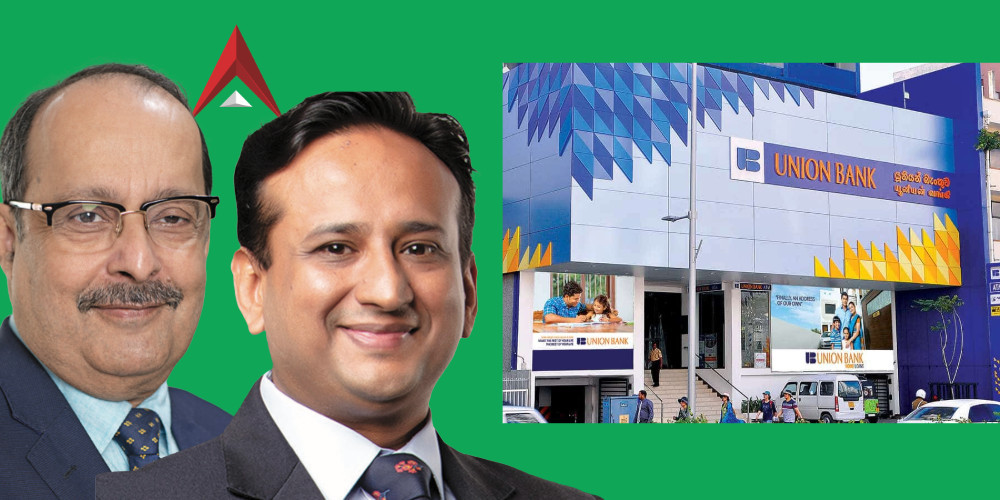
Chaudhary recently appointed two directors from Nepal’s Nabil Bank to top roles in Sri Lanka’s Union Bank of Colombo. His son, Nirvana Chaudhary, a director at Nabil Bank, now chairs Union Bank.
Malay Mukherjee, another Nabil Bank director, has also joined Union Bank’s board. These dual roles are causing a stir.
Union Bank’s website highlights Nirvana Chaudhary’s connection to both CG Corp Global and Nabil Bank. Similarly, Malay Mukherjee’s profile emphasizes his ties to CG Corp Global and his long banking career.
Loopholes in Nepali Law
Nepal’s Banks and Financial Institutions Act (BAFIA) 2017, bans individuals from serving as directors in more than one Nepali bank. However, it doesn’t address directors taking roles in foreign banks. This gray area allows Chaudhary to appoint directors from Nabil Bank to Union Bank without breaching Nepali law.
Sections 14, 16, and 18 of BAFIA set rules for bank directors. While these sections prevent dual roles within Nepal, they’re silent on foreign positions. This loophole has critics worried about potential conflicts of interest.
Nepal Rastra Bank (NRB), the central bank, is aware of these appointments but hasn’t acted, citing gaps in the law. An NRB official, speaking anonymously, said the issue highlights the need for regulatory updates.
'Individuals who are directors of Nabil Bank have also taken up roles as chairman and directors of Union Bank of Colombo. However, due to legal limitations, Nepal Rastra Bank is unable to address this matter,’ the official stated.
Nabil Bank’s Overseas Ties
It appears that Binod Chaudhary has significant indirect investment in Union Bank of Colombo through Nabil Bank. Notably, the dividends declared by Nabil Bank are regularly transferred abroad via NB International, a practice widely known.
NRB has also confirmed that NB International transfers dividends abroad annually. With the approval of central bank, NB International has been channeling substantial amounts of dividends out of Nepal through Nabil Bank.
In 2018 , under the KP Sharma Oli-led government, concerns were raised regarding the share ownership structure of NB International, leading to a two-year suspension of dividend transfers. However, after Nabil Bank submitted NB International’s shareholding details to central bank, amendments to the Foreign Investment Act facilitated the resumption of dividend transfers.
NB International, registered in Ireland, currently holds approximately 39 percent of shares in Nabil Bank. This represents a reduction from its earlier 50 percent shareholding following Nabil Bank's acquisition of Nepal Bangladesh Bank.
According to documents submitted by Nabil Bank to central bank , NB International is 49 percent owned by Cinnovation and 51% by South Asia Financial Corporation.
Cinnovation, registered in Singapore, is 99.5 percent owned by Binod Chaudhary and Rahul Chaudhary, while South Asia Financial Corporation is owned by Bangladeshi businessman Abdul Minto. Additionally, Nirvana Chaudhary, holding a 0.7 percent share in Nabil Bank, has been appointed as a director of the bank based on his shareholding.
A Strategic Acquisition
Chaudhary Group acquired a 70.84 percent stake in Union Bank during Sri Lanka’s economic crisis. Shares valued at 10 Sri Lankan rupees were purchased for around 5.5 rupees each-a bargain deal.
The acquisition was made through CG Capital Partners Global, a Dubai-based subsidiary of CG Corp Global, with the agreement signed in Singapore to avoid Sri Lankan jurisdiction. This has drawn scrutiny for its lack of transparency.
Calls for Reform
Nabil Bank, Nepal’s most profitable bank, manages Rs 479 billion in deposits and Rs 381 billion in loans. Critics argue that NRB’s inaction on dual roles undermines trust in the banking system.
Experts are urging NRB to issue guidelines or work with foreign regulators to set clear boundaries.