
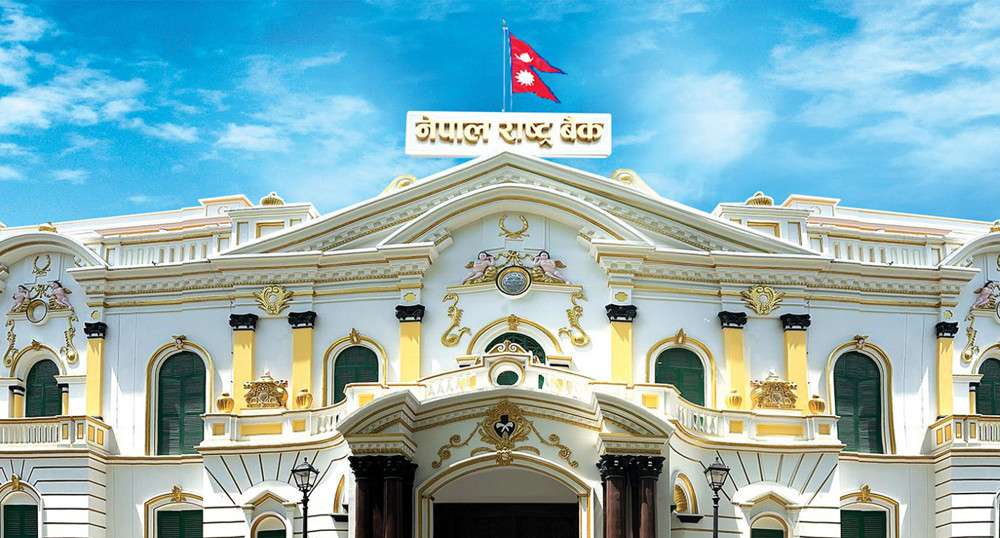
Kathmandu – With the rise in foreign exchange reserves, Nepal Rastra Bank has seen its income swell, as higher reserves generate more interest earnings from investments in foreign financial instruments.
In the past four years, earnings from central bank's deposits and bond investments in foreign currencies have steadily climbed, reaching nearly Rs 100 billion in the fiscal year 2024-25.
According to central bank officials, last year alone, the bank earned more than Rs 97 billion from investing its foreign exchange reserves and deploying them in various financial instruments.
NRB invests its foreign reserves in a range of overseas instruments. Of these investments, around 60 percent are held in US dollars, followed by investments in Indian rupees.
Recently, higher global interest rates — including rising rates in Japan — have further boosted the central bank’s earnings.
However, the bank’s interest expenses also increased last year, mainly due to higher interest payments to domestic commercial banks.
In the last fiscal year, NRB had earned Rs 78.16 billion purely from foreign currency investments. In 2023-24, the earnings stood at Rs 47 billion, while in 2022-23 the amount was only Rs 18 billion.
Within the first 11 months of 2024-25, foreign exchange reserves increased by USD 3.38 billion, reaching a total of USD 18.65 billion.
As the foreign exchange reserves grow, so does the central bank’s income. However, the bank has so far chosen to invest only in safe instruments.
It has not yet been able to invest in riskier assets that offer higher returns. Likewise, despite a policy aim to gradually increase investments in gold, this has yet to move forward.
The rising income from these investments has also contributed significantly to the government’s treasury. In 2024-25 alone, NRB provided the government with Rs 37 billion in dividends.
After allocating mandatory reserves from net profit, the remaining amount is transferred to the government as dividends.
With interest earnings increasing by nearly Rs 20 billion last year, dividends to the government are also expected to rise.
On the other hand, while NRB invests the country’s valuable foreign exchange reserves only in foreign bonds and other instruments, the government simultaneously remains forced to borrow expensive domestic and foreign loans.
For a long time, economists have suggested that this capital should instead be mobilised to support domestic capital formation.
© 2026 All right reserved to biznessnews.com | Site By : Sobij
© 2026 All right reserved to biznessnews.com | Site By : Sobij