
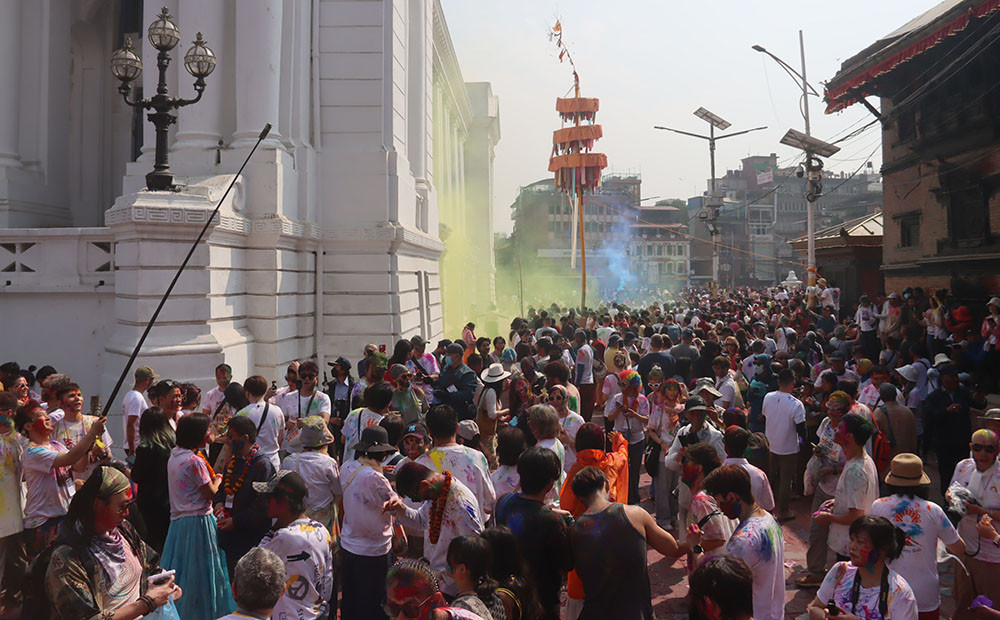
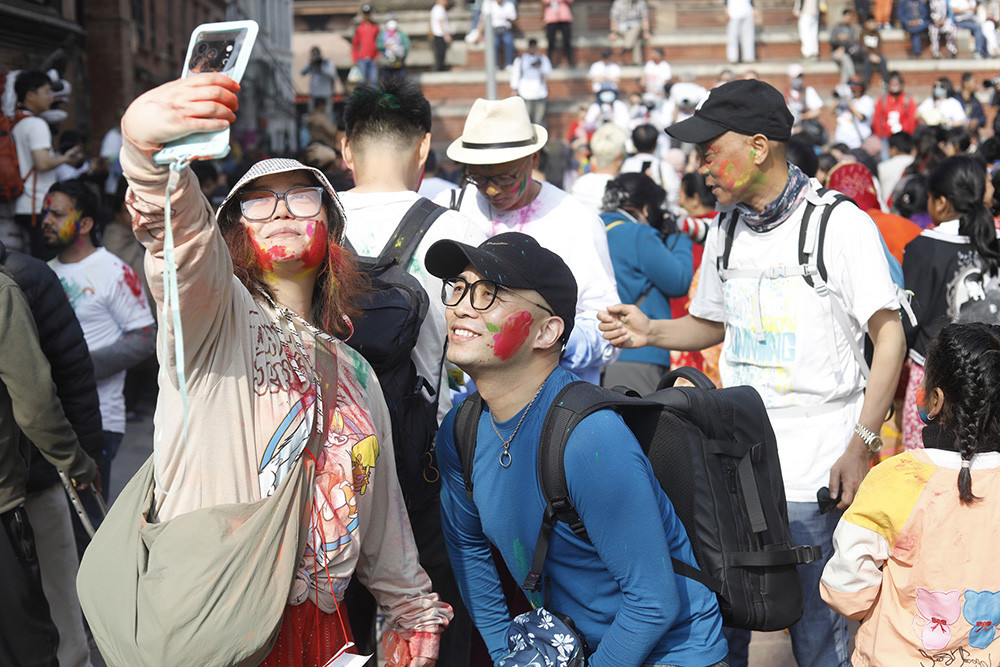
Kathmandu-Phagu Purnima, also called Holi, is celebrated today in the Himalayan and hilly districts. People play with colors and water balloons. The festival falls on the full moon day of Falgun.
The festival marks the arrival of spring. It spreads harmony and goodwill. People have celebrated it since ancient times. Earlier, celebrations in the Kathmandu Valley were often unruly. Police action has made them more orderly in recent years.
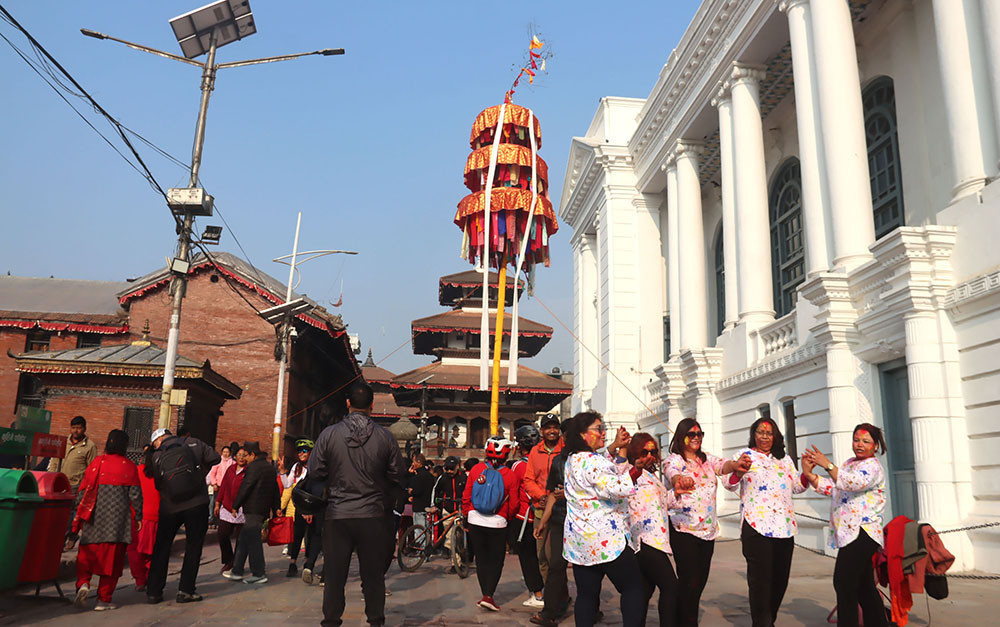
Today, Basantapur in Kathmandu is lively since morning. People add color to the area. They lower the ceremonial pole called Chir. They take it with music to Tundikhel and burn it. People believe the flags on the Chir have healing value. They take them and apply ash from the burned Chir to avoid misfortune.
Phagu starts on Falgun Shukla Ashtami. On that day, people worship the Chir placed in front of Gaddi Baithak. It is decorated with colorful flags. Tonight, a ritual linked to the demon Gurumapa takes place at Tundikhel. Food made from ten pathi of rice and buffalo meat is carried from Itumbahal without stopping. It is offered and the remains are thrown into the Jadhu spout inside the military hospital.
A story from the Treta Yuga links to this festival. Hiranyakashipu tried to kill his son Prahlada. His sister Holika had a boon that fire could not harm her. She entered fire with Prahlada but burned, while Prahlada survived. People mark this event by playing Holi.
Another story comes from the Dwapara Yuga. A demoness sent by King Kansa tried to poison Krishna. She failed and died. People then burned her and celebrated Phagu, according to religious texts.
Natural colors and abir can help prevent skin problems. They reduce winter related mucus issues. Smoke from the burned Chir may also kill germs. This gives the festival Ayurvedic value.
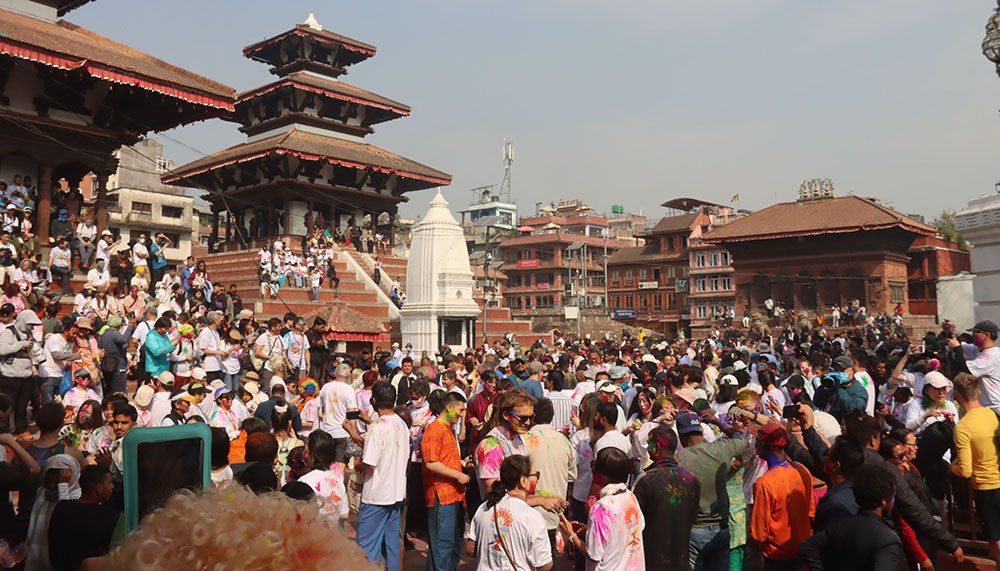
The government declares a public holiday for this festival. In the Terai, Holi is celebrated the next day. This year it falls on Tuesday there.
Recent years show fewer problems such as fights after intoxication, harmful chemical colors, and balloons thrown at vehicles. People often eat food mixed with bhang. Groups sing, dance, and visit areas from morning to evening.
In the Thakali community, families gather in colorful clothes and hold archery contests. The festival lasts seven days. Relatives meet daily, share food, and celebrate.
© 2026 All right reserved to biznessnews.com | Site By : Sobij
© 2026 All right reserved to biznessnews.com | Site By : Sobij