
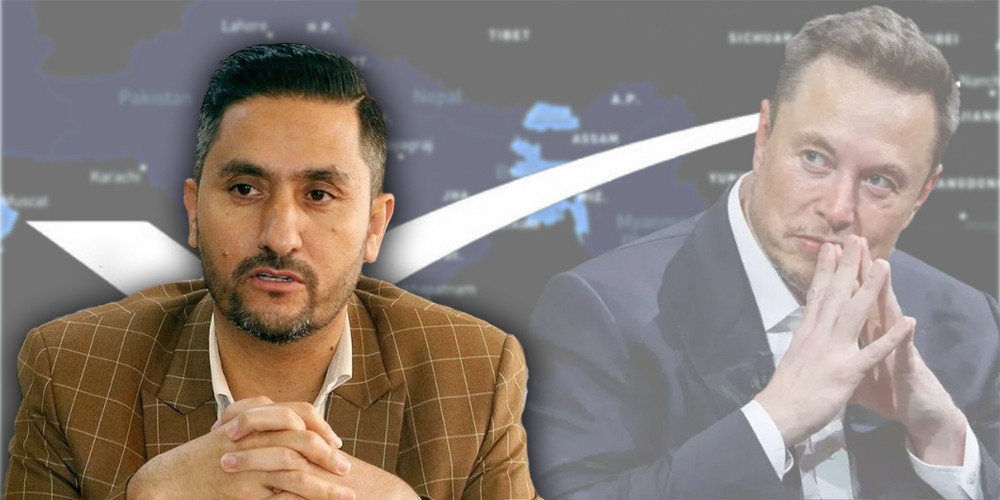
Kathmandu- Elon Musk’s Starlink has been attempting to enter Nepal to provide satellite internet services. Repeated resistance from successive governments has stalled the process.
The first effort began during the government led by KP Sharma Oli. Talks were underway, but the government collapsed before any decision.
After Sushila Karki formed a new government, Starlink renewed its attempt. The process was again blocked by then Minister for Communications and Information Technology Jagdish Kharel.
According to source, Kharel intervened directly and labeled Starlink as a technology that could be used for military purposes.
He reportedly persuaded Prime Minister Karki to halt the process on national security grounds.
Kharel has since resigned and is now contesting the House of Representatives election from Lalitpur constituency number 2 as a candidate of the Rastriya Swatantra Party.
Source says Kharel blocked Starlink’s entry due to pressure from Chinese interests and lobbying by domestic internet service providers.
He presented himself as a geopolitics expert and convinced the prime minister not to allow Starlink.
‘This halted the initiative for a second time.’
On January 19, 2024, Nepal established direct contact with SpaceX President Gwynne Shotwell. She agreed to hold discussions with then Prime Minister Oli. Oli later insisted on direct talks only with Elon Musk. Under the initiative titled Mount Starlink Nepal, Musk reportedly showed interest, and senior SpaceX officials also expressed support.
After a new government took office, Finance Minister Rameshwar Khanal met the Starlink team in Washington DC and briefed Prime Minister Karki. However, Kharel, acting as the ministerial level coordinator, again blocked progress by arguing that Starlink was a militarized technology.
The process reportedly broke down after the communications minister objected to the engagement, claiming the Prime Minister’s Office had excluded relevant stakeholders. He termed the discussions inappropriate and began handling the issue in a confrontational manner.
A conference call between Elon Musk and Prime Minister Oli also took place. After that, Nepali authorities gradually stopped responding to Starlink representatives.
Letters sent to the Telecommunications Authority and the Ministry of Communications and Information Technology for further talks went unanswered.
Starlink has remained active in seeking entry into Nepal for more than a year and a half. Policy and procedural barriers have kept approval stalled. While Starlink prepares to expand services across South Asia, it has complained about indifference from Nepali government agencies.
Current telecom policy does not allow foreign companies to operate with full ownership. A minimum of 20 percent local investment is mandatory. Starlink does not follow this model elsewhere and has been lobbying for a policy change in Nepal.
Opponents argue that Starlink’s entry could threaten investments by existing telecom operators, reduce government revenue, and raise data security concerns.
They also cite national security risks of foreign control over communication infrastructure. Critics say these arguments reflect lobbying by Chinese interests and some domestic providers.
Reports have already emerged of Everest climbers using Starlink internet. Stakeholders warn that allowing informal use while blocking legal entry will create long term problems. Despite this, communications ministers have continued to block formal approval.
The government says Starlink cannot be allowed without amending telecom policy. With India and other neighboring countries preparing to launch the service, Nepal faces a growing risk of illegal use if approval is delayed.
Analysts warn that once Starlink starts operations in India, Nepal could face a situation similar to the DTH era, where revenue flows abroad while the market expands locally.
Bhutan has already approved the technology. Nepal, however, continues to block it amid foreign influence and domestic lobbying.
© 2026 All right reserved to biznessnews.com | Site By : Sobij
© 2026 All right reserved to biznessnews.com | Site By : Sobij