
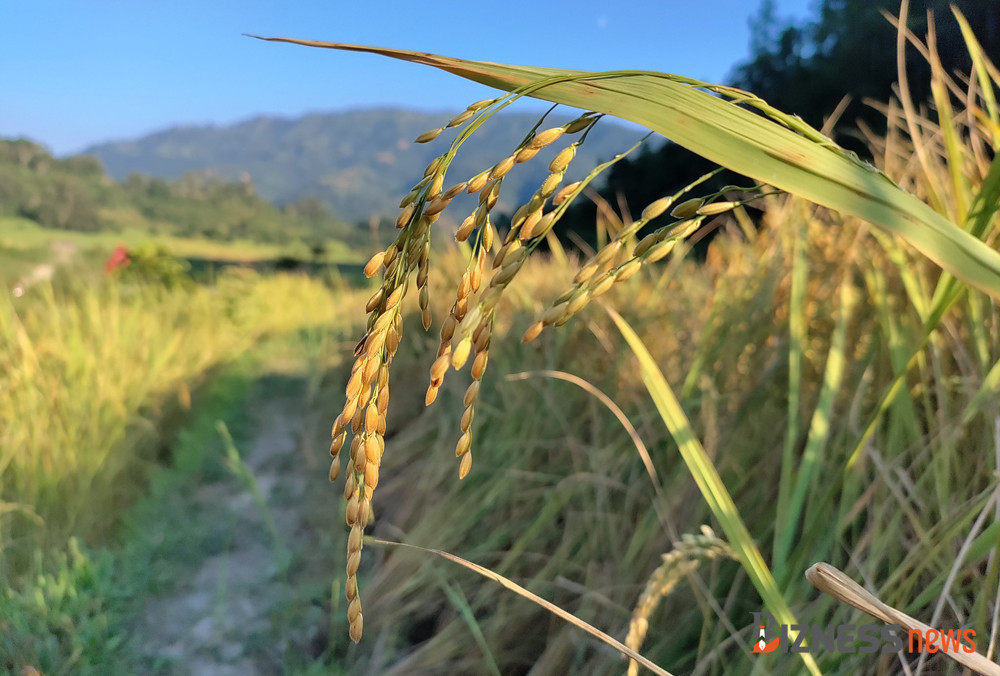
Kathmandu - The Government of Nepal has projected that paddy production in the current fiscal year will reach a historic high.
The Ministry of Agriculture and Livestock Development estimated a production of 5.955 million tons. The National Statistics Office has also projected favorable economic growth due to this increase.
Despite the rise in production, over Rs 15 billion worth of rice has already been imported in the first 10 months of the fiscal year.
According to the Department of Customs, imports during this period totaled Rs 15.76 billion.
Many see it as a statistical inconsistency that rice imports peak in the same year as record-high paddy production.
Despite rising output, imports have not significantly declined—except in a few isolated years.
The government explains that rice is imported not only for consumption but also for industrial use.
This suggests that domestic production still falls short of demand, prompting continued annual growth in imports.
Each year, the government spends billions in subsidies and aid to boost paddy production.
However, this has neither met demand nor curbed imports.
The persistent rise in imports, despite higher production, highlights a deeper paradox in Nepal’s agricultural economy.
Although 'agricultural super zones' were introduced to increase production, progress has been limited.
According to the Ministry of Agriculture, even with increased output, production is still insufficient to meet demand—falling short by about 800,000 tons.
Yet, recent household surveys reveal significant shifts in consumption habits, with food grains occupying a smaller share.
Officials cite several reasons for rising rice imports.
Nepal's production system remains largely unchanged. Consumer preference has shifted toward fine rice, while farmers continue to grow mostly coarse varieties—one of the main drivers of import demand.
Mahananda Joshi, an agricultural economist and information officer at the Ministry, shared that while coarse rice is widely consumed at the household and farming levels, general consumers prefer fine rice.
Officials also claim that much of the domestically produced rice is used in industrial sectors rather than for direct consumption, though no concrete data backs this.
Because of lower pest risks and familiarity with traditional farming practices, farmers are hesitant to switch seed varieties.
This limits the ability of domestic production to substitute imports.
Most of the rice found in urban markets comes from Indian paddy. The practice of importing rice from India and packaging it in Nepal is growing.
Indian rice is becoming increasingly dominant in the Nepali market. Even when formal imports decline, Indian rice continues to flood the market through informal channels.
In a country where two-thirds of the population depends on agriculture, reliance on imported rice keeps increasing despite higher domestic production.
Government efforts to boost production have largely fallen short.
Though the government has developed various paddy seed varieties to meet market demand, their distribution remains limited.
Farmers, confident in traditional seeds, are reluctant to adopt new ones. Consequently, major urban markets—particularly in metropolitan areas—rely heavily on Indian rice.
Informal imports also contribute significantly, making it difficult to get accurate figures.
Still, most of the rice sold in Kathmandu is made from Indian paddy. Fine rice is cheaper and yields higher profit margins, making it the preferred choice for traders.
Even government officials admit that Nepali farmers are reluctant to grow fine rice due to high production costs and concerns about marketability.
© 2026 All right reserved to biznessnews.com | Site By : Sobij
© 2026 All right reserved to biznessnews.com | Site By : Sobij