
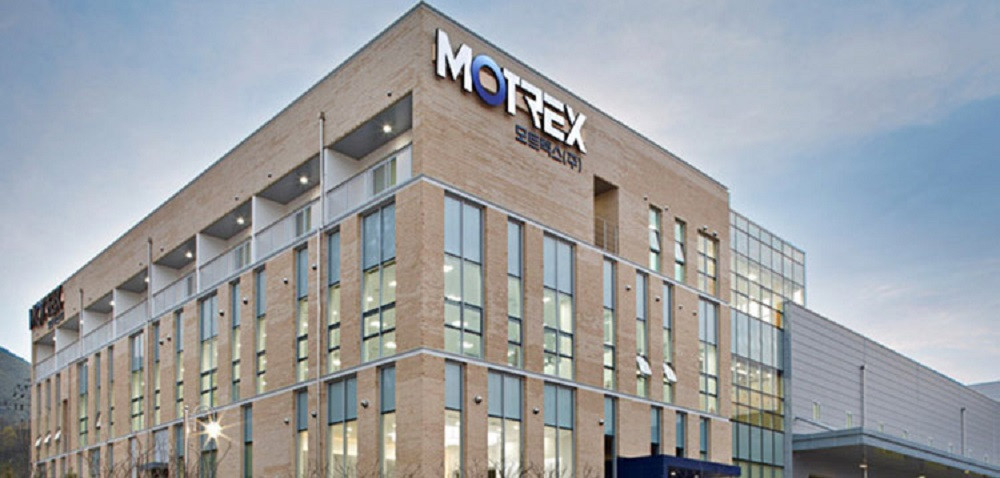
Kathmandu- Motrex Co. Ltd, a South Korean automobile company, has withdrawn its investment plans from Nepal following the Finance Ministry's refusal to grant customs and excise duty waivers.
Initially, Motrex had proposed establishing a manufacturing and assembly plant for four-wheelers in Nepal, submitting its proposal to the Investment Board Nepal (IBN) in March 2018.
The company committed an investment of approximately Rs 11.95 billion through an initial agreement inked in December 2019. However, the plan stalled after the government rejected several key demands, including significant tax waivers.
In 2022, the Motrex abandoned plans for fossil fuel cars , and re-approach to build the a manufacturing and assembly plant for electric vehicles (EVs) arrangement of land for the construction of its plant and policy-law facilitation.
Motrex Company Limited held multiple discussions with the Investment Board regarding land acquisition, regulations, and facilitation required for car production in Nepal.
Later, when the government introduced policies to promote electric vehicle (EV) production, the terms and conditions initially agreed upon with Motrex were revised. During the amendment of the agreement, Motrex demanded a 70 percent exemption on customs duties and an 80 percent exemption on excise duties.
The process stalled after the issue of tax exemptions was referred to the Ministry of Finance.
Currently, no representatives from Motrex have approached the Investment Board.
In the latest meeting, Motrex reportedly indicated that it would not proceed with the investment unless Nepal agreed to its terms of tax exemptions and restrictions on the entry of competing companies for seven years. However, the government refused to accept such conditions.
Citing a lack of significant benefits, officials from the Ministry of Finance opted not to grant the requested tax exemptions. Motrex informed the Investment Board that it would not proceed with further steps until the tax issues were resolved, leading to a halt in the process, which had reached the agreement stage.
Although the company had reached a preliminary understanding with Nepal, the Investment Board clarified that a Project Implementation Agreement (PIA) was yet to be finalized.
The Investment Board is responsible for approving Foreign Direct Investment (FDI) exceeding Rs 6 billion.
Following Motrex's announcement of its intent to establish a car assembly plant in Nepal, other businesses that import cars as official distributors began registering industries to establish similar assembly plants.
Motrex claimed that if Nepal provided the required facilities and support, the company would be ready to establish the plant. It projected an annual production of 5,820 vehicles in the first year, 9,530 in the second year, 15,080 in the third year, and 20,000 from the fourth year onward.
The company proposed that the project would break even in the fifth year of initiation and the fourth year of production.
Discussions were held between the Investment Board, the Ministry of Finance, and other stakeholders regarding leasing 100 ropanis of land in the Motipur Industrial Zone to Motrex.
Key 13 Conditions Proposed by Motrex:
1.No licenses should be issued to similar industries for seven years. After this period, licenses may only be issued to industries with at least $100 million in 100 percent foreign investment.
2.Full exemption of corporate tax, dividend tax, and VAT for the first five years.
3.Provision of exemptions for electricity and other necessary resources.
4.Lease concessions within the industrial area, with complete waiver of rent for the first two years.
5.Permission under the same license to establish industries for producing auxiliary components (spare parts, equipment, and electronic materials).
6.Provision of a six-month non-tourist visa for potential investors and research/feasibility studies, as well as commercial visas for foreign investors, their families, and foreign workers for the duration of their investment.
7.The government must arrange for roads, electricity, and water for the plant.
8.Complete customs exemption on the import of capital goods, including machinery, plants, and equipment, along with customs exemptions on replacements of such items.
9.Customs duty exemptions on importing fully finished products under Motrex Nepal's quota during the plant construction phase.
10.Permission to purchase land for commercial purposes, with full exemptions on property and other taxes.
11.Tax exemptions for training and research and development facilities.
12.The plant must be declared an essential industry by the government.
13.Foreign workers should be allowed to repatriate their salaries, allowances, and other income in foreign currency to their home countries.
© 2026 All right reserved to biznessnews.com | Site By : Sobij
© 2026 All right reserved to biznessnews.com | Site By : Sobij