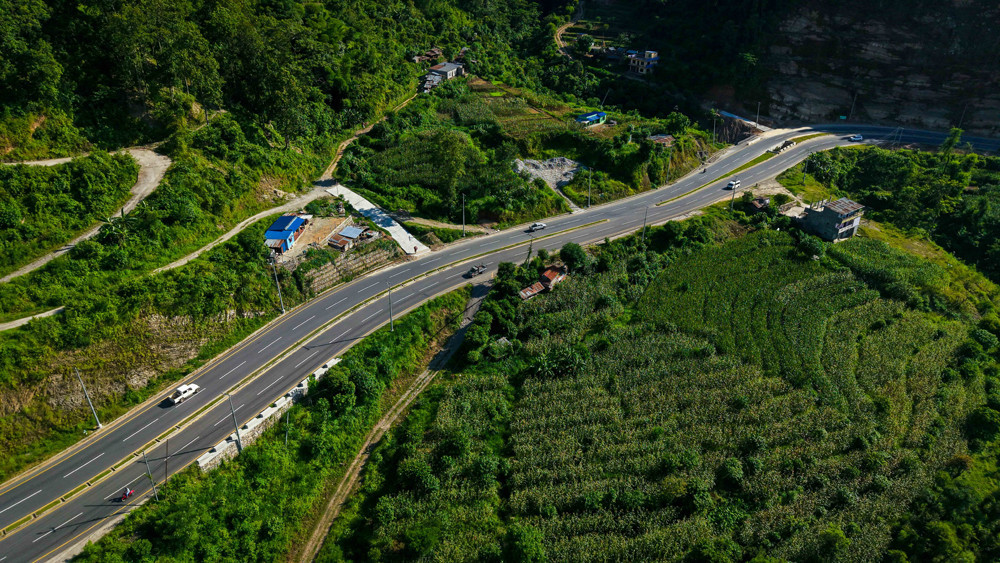
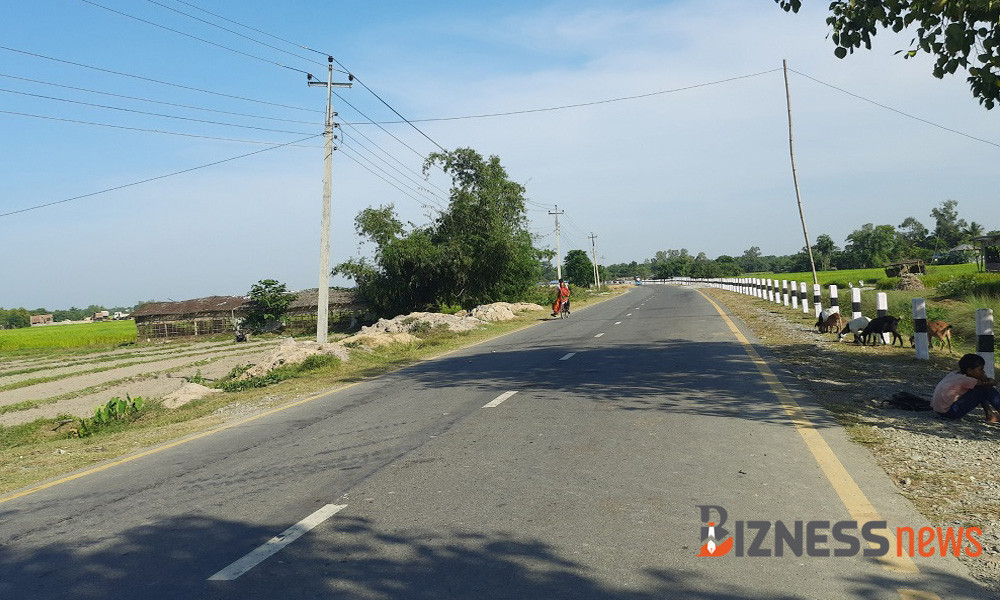
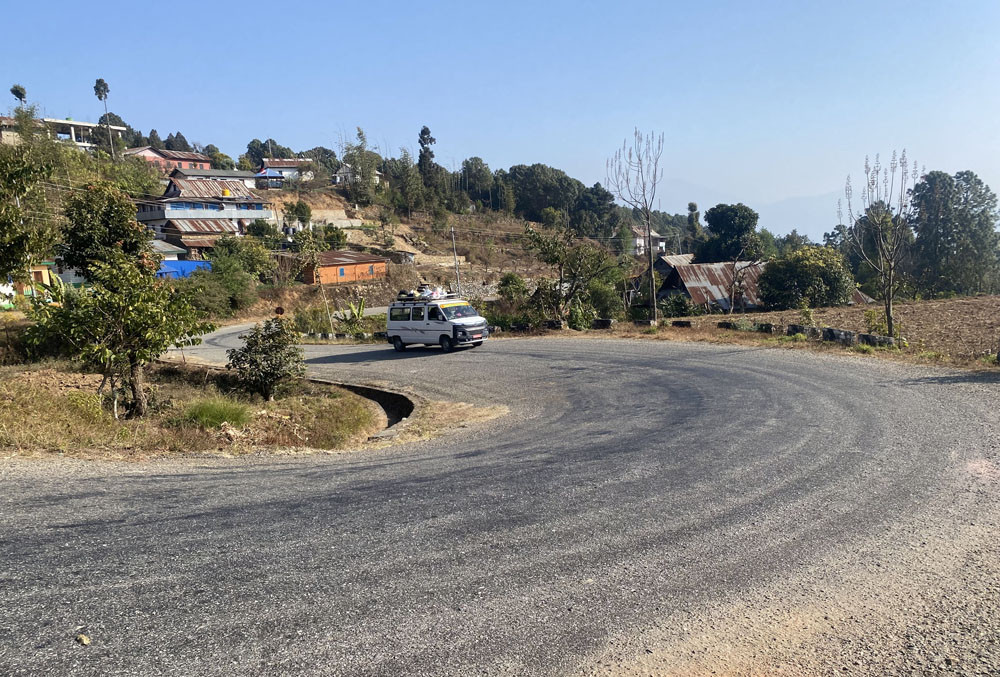
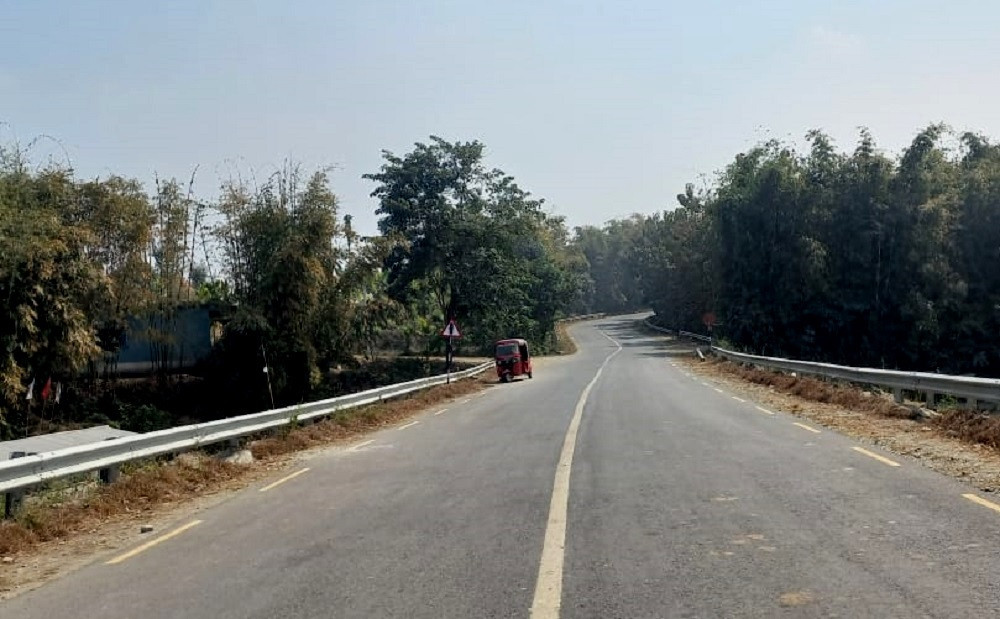
Kathmandu- As construction and upgrades continue nationwide, Nepal is also steadily improving its road infrastructure.
Four of the country’s major National Pride Projects—spanning from east to west—are currently either under construction or undergoing major upgrades.
Despite longstanding concerns over poor road conditions, even gradual progress has begun to make a noticeable impact. The number of national highways in the country has now reached 80. Some of these are aimed at enhancing travel convenience, while others have been designed with trade and strategic importance in mind.
However, the growing network has yet to fully deliver seamless travel across the country.
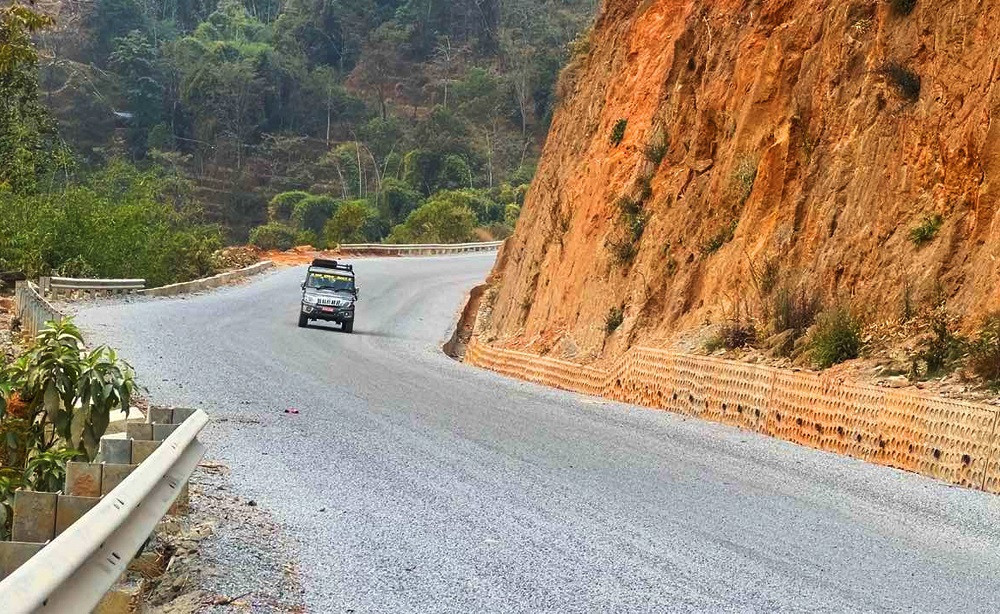
As Nepal continues to weave together its provinces with new roads, the national conversation is increasingly focused on road quality, efficiency, and functionality. Wide, pothole-free, and obstruction-less roads are vital—not only to ensure timely travel for citizens, but also to strengthen the national economy.
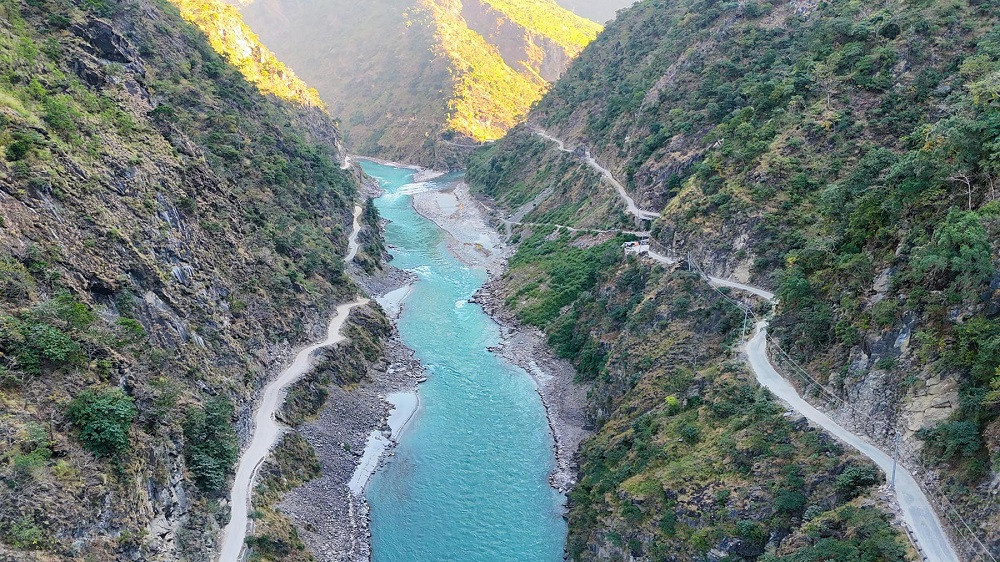
Compared to previous years, Nepal has significantly ramped up the pace of road expansion, development, and improvement. The government is prioritizing the widening and upgrading of key routes and corridors, especially those aligned along major rivers such as the Karnali, Kali Gandaki, and Koshi, which serve as critical north-south connectors.
Postal Highway
The historic Postal Highway, once the lifeline for communication across the Terai-Madhesh region from Jhapa to Daiji in Kanchanpur, is now being rebuilt and modernized. Managed by one central and five regional offices, the project includes 975 km directly under the Postal Highway Directorate, with an additional 882.42 km from 35 auxiliary roads—bringing the total to 1,857.42 km.
Out of 300 planned bridges, 151 have been completed as of mid-2025 (Ashar 2082), according to Senior Divisional Engineer (CDE) Bishnu Babu Pandey. Over 300 km of road and around 60 motorable bridges are still under construction.
Initially estimated at Rs. 65.2 billion, the revised project cost now stands at Rs. 101.93 billion (excluding compensation). The highway cuts across 21 Terai districts, with 72.26 percent physical and 68.96 percent financial progress recorded so far.
Mid-Hill Highway
Stretching 1,879 km, the Mid-Hill Highway began construction in FY 2064-65 (2007-08) and is now expected to be completed by FY 2084-85 (2027-28). The revised cost is Rs. 84.33 billion.
By Ashar 2082, physical progress reached 81.73 percent, with financial progress at 84.31 percent—equivalent to Rs. 71.1 billion spent, according to CDE Sarala Neupane.
Of the total, 1,048.86 km was built under the core project, while an additional 462 km came through other departments, totaling 1,510.86 km of blacktopped road. Of 137 required bridges, 111 have been completed.
Contracts remain pending for 107 km of road and 16 bridges, some of which were damaged by floods. The highway aims to uplift livelihoods and improve access across the hilly belt from Panchthar in the east to Baitadi in the west.
Madan Bhandari Highway The Madan Bhandari Highway, linking Bahundangi in Jhapa to Rupal in Dadeldhura across 19 districts, traverses both hills and plains. While the total projected length is 1,390 km, the project office is responsible for building 740 km.
Construction began in FY 2075-76 (2018-19) with a target completion by FY 2084-85 (2027-28). Out of the 740 km, contracts have been signed for 570 km, and 369 km have already been blacktopped. Of 185 planned bridges, 152 have been completed. Contracts for 170 km of road and 24 bridges are still pending.
CDE Badri Prasad Sharma reports 52 percent physical progress and Rs. 39 billion spent out of the estimated Rs. 75 billion. Delays stem from land compensation issues, unresolved road demarcation, and disputes in some contract packages.
East-West Highway
The 1,027 km long East-West Highway, Nepal’s main arterial route, is being upgraded by five separate offices. The most critical bottleneck is the 113 km Narayanghat–Butwal section, especially the 14 km Daunne stretch.
A contract was signed in 2019 (Magh 2075) for completion by mid-2022, but the Chinese contractor has caused delays, now requiring a fourth deadline extension. Funded by the Asian Development Bank (ADB), the overall physical progress is 64 percent.
The project, which lacks direct government funding, has an estimated cost of Rs. 16.99 billion. Contracts have been signed for 470 km, while the rest remains under feasibility study.
The Kakarbhitta–Laukahi (Itahari) section is also being upgraded to four lanes, with completion set for February 2027. As of now, progress is just 17 percent, against a cost of Rs. 34.91 billion.
Prithvi Highway
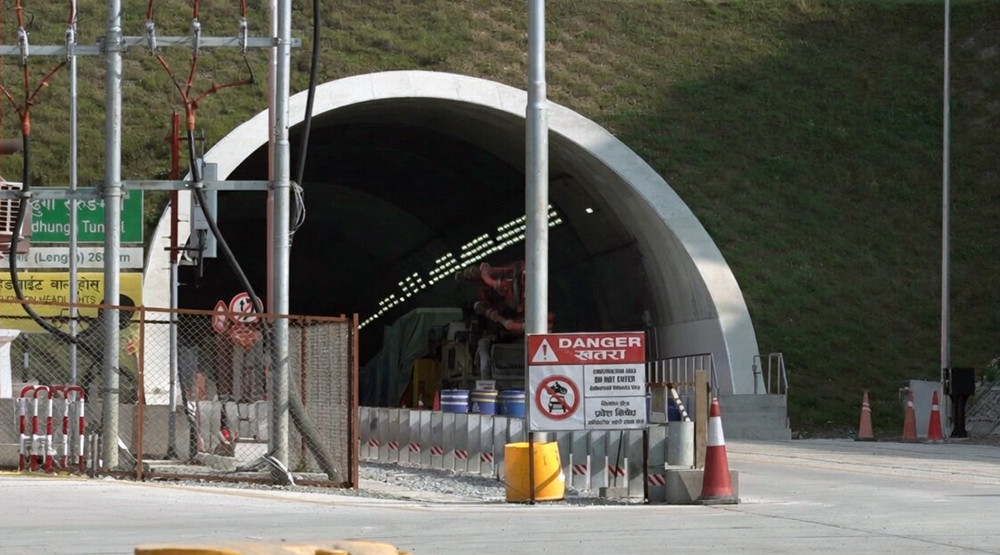
Connecting Kathmandu to western Nepal, the Prithvi Highway is undergoing major widening projects, including Nepal’s first modern road tunnel—the Nagdhunga–Naubise tunnel.
From Thangkot to Pokhara, sections are being expanded to four or even six lanes, depending on the area. The road is divided into four segments, with significant progress noted on the Muglin–Pokhara east section (86 percent) but slower on the west (55 percent).
The eastern section’s contract, held by China Communication Construction, was signed in early 2021 with a cost of Rs. 6.21 billion. Minor finishing work remains, requiring an additional extension.
The western section (Jamune to Pokhara) is 38.8 km long, with only 26 km completed as four-lane road. The rest is still under upgrade. Its contract, worth Rs. 7.4 billion, was awarded to Anhui Kuan Highway & Bridge, with a deadline of Poush 2082 (December 2025).
BP Highway
The BP Highway, linking Dhulikhel (Kavre) to Bardibas (Mahottari), is a vital route connecting Kathmandu with the eastern Terai and hills. Built with JICA’s financial and technical aid, construction began in 1995 and was completed in 2015.
However, in October 2024, floods damaged a 28 km stretch between Kavre and Sindhuli. The Ministry of Physical Infrastructure has initiated reconstruction, dividing the stretch into four segments. Three contracts are signed; JICA will handle the final 3 km.
Due to safety concerns, night travel on the BP Highway remains suspended for now.
Araniko Highway
The Araniko Highway, connecting Kathmandu with China via Tatopani, is vital for both travel and trade. However, the 4 km Dhulikhel–Khawa stretch has remained unimproved for three years.
The old contract was canceled, and a new tender has been called. Meanwhile, the 16 km Surya Binayak–Dhulikhel road is being upgraded to six lanes, with work started in December 2022. Completion is expected in 36 months, at a cost of Rs. 3.87 billion.
Combined with flood damage to the BP Highway, delays here have impacted trade routes with eastern Nepal and China.
Kathmandu–Terai Expressway (Fast Track)
The Kathmandu–Terai Expressway, also known as Fast Track, is Nepal’s most ambitious road project. Launched in May 2017 and overseen by the Nepal Army, it had achieved 42.13 percent physical progress by mid-2025.
The 70.97 km road, built to Asian Highway standards, connects Khokana (Lalitpur) to Nijgadh (Bara), cutting travel time to just over 1 hour. Total cost: Rs. 211.93 billion, with 44 percent already spent.
The project includes 7 tunnels and 89 bridges, many of which feature advanced “high-rise” bridge designs new to Nepal. Several tunnels, including those at Nijgadh and Dhodre, have already broken through. The longest—Mahadev Danda—is about 70 percent complete.
Karnali Corridor
Another National Pride Project, the Karnali Corridor spans 268.65 km from Khulalu (Kalikot) to Hilsa (Humla). In 2025, Prime Minister KP Oli inaugurated a key bridge, marking the first time all 77 districts are connected to the national road network year-round.
Divided into northern and southern sections, the corridor now enables road access to Mount Kailash (Manasarovar). Of the 18 planned bridges, several are complete, and the rest are under construction. Total cost: Rs. 6.66 billion. Physical progress: 35 percent, financial: 34 percent.
North–South Trade Routes
Seventeen North–South Trade Routes are being constructed under a national corridor project spanning from the Himalayas to the Terai. CDE Binod Bhattarai says these are intended to connect China, Nepal, and India through cross-border commerce.
However, since not all border points are open, these roads currently serve primarily domestic transport needs.
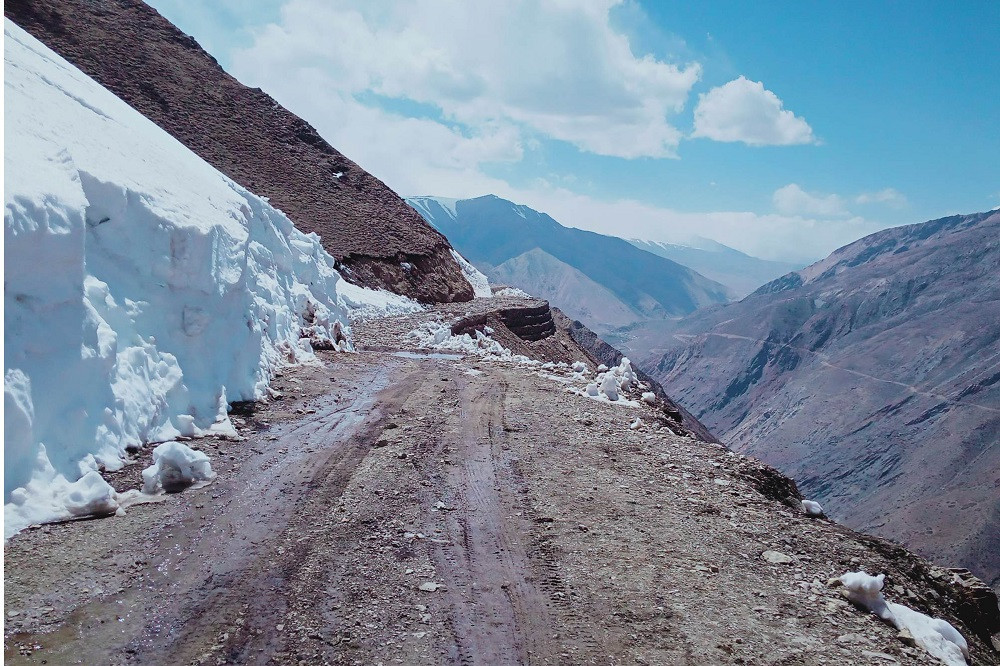
Most of the roads in Himalayan and hill areas face slow progress due to harsh terrain, logistical issues, and budget constraints.
District-Level Strategic Roads
Though progress on the Strategic Roads for Electoral Constituencies initiative has varied, several key areas have seen notable development.
Major district-focused roads under construction include: