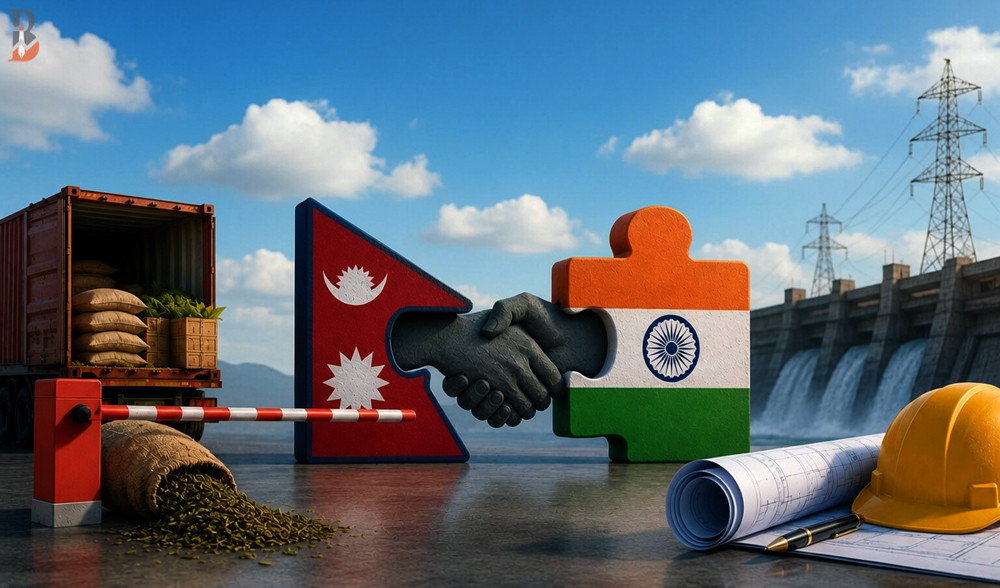


Kathmandu,– Nepal's exports reached an unprecedented peak in the last fiscal year (2024-25).
Even a milestone celebrated by Prime Minister KP Sharma Oli.
Taking to social media, Prime Minister announced that the nation successfully exported goods and services valued at Rs 277.32 billion, marking a significant 81.80 percent increase from the previous fiscal year's Rs 152.38 billion.
Prime Minister Oli attributed this substantial growth to his government's tenure.
While the figures are indeed historic, a closer look reveals underlying vulnerabilities that could impact future export performance, prompting calls for a strategic shift towards sustainable, homegrown production.
A major driver of this export surge has been edible oil, accounting for over Rs 144.79 billion in the last fiscal year. Refined soybean oil led the charge, followed by sunflower oil, palm oil, and other varieties.
Nepal's current model involves importing crude oil from countries such as Argentina, Brazil, Indonesia, and Ukraine, refining it domestically, and then exporting the finished product primarily to India.
This trade dynamic has been significantly boost by the Nepal-India trade agreement, which granted Nepali products duty-free access to the Indian market.
Previously, India levied a 27 percent customs duty on crude oil imports, while exports from Nepal enjoyed exemptions under the SAFTA (South Asian Free Trade Area) agreement, creating a favorable arbitrage opportunity for Nepali refiners.
However, a critical shift in India's import policy threatens to disrupt this advantage. India has recently extended its lower import duties on crude oil to other countries, effectively diminishing the preferential treatment previously enjoyed by Nepali exporters.
While the new rates, effective since mid-May, have reduced customs duties by up to 10 percentage points, their full impact has yet to be reflected in export statistics. Experts anticipate that the ramifications will become evident in data from the current fiscal year (2025-26).
To ensure long-term stability and continued export growth, there is a pressing need for Nepal to pivot towards fostering genuinely homegrown production.
© 2026 All right reserved to biznessnews.com | Site By : Sobij
© 2026 All right reserved to biznessnews.com | Site By : Sobij