
Kathmandu-Political stability has long been a key issue raised in Nepal, not only by private sector but also by political leaders. They have often complained that the lack of governance and policy stability has weakened the investment climate, while a cycle of commissions at every step has discouraged entrepreneurship.
The same political stability that everyone has been seeking, and that voters had not delivered for a long time, appears to have emerged with unprecedented force from this election.
Business leaders have long argued that political stability ensures policy continuity. It also creates accountability, which compels everyone to deliver results. Such conditions help build a stronger investment environment.
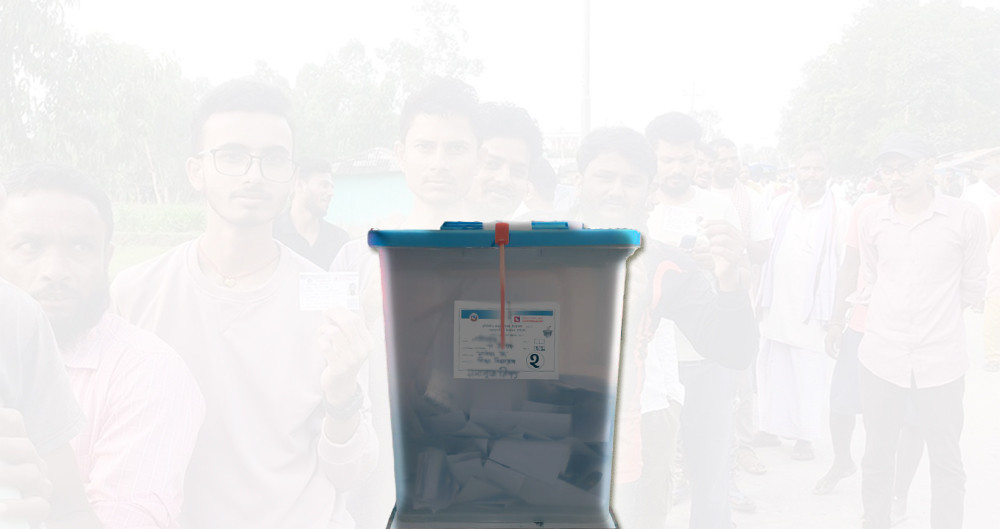
From the election held on March 5, the Rastriya Swatantra Party has not only secured a clear majority but is also close to a two thirds majority. This has raised expectations that a single party government could remain in power for the next five years. For this reason, Nepal’s private sector has welcomed the result and appears optimistic.
Chandra Prasad Dhakal, president of the Federation of Nepalese Chambers of Commerce and Industry, said the election outcome reflects what the private sector had been demanding.
'We were facing difficulties because there were three governments within five years, and each government introduced different policies. That is why we kept saying political stability is necessary.
This time, the people have given it wholeheartedly,' Dhakal said. 'We welcome the results of this election.'
The party that has secured the majority has also declared its commitment to a private sector friendly environment and investment promotion. It has pledged good governance and development, and voters supported it largely on that basis. This has made business leaders hopeful.
In recent years, business leaders have been saying that it has become difficult to operate in Nepal without political protection. They have argued that a stable and accountable government is necessary to break that cycle.
There has been a pattern where one government amends laws, but when another government comes to power, it does not take ownership of the regulations required to implement them. As a result, they are delayed or ignored. Business leaders say that although there have been attempts at reform, frequent changes in government have slowed progress.
Birendra Raj Pandey, president of the Confederation of Nepalese Industries, said reforms could now accelerate if the government remains stable, as their progress will also be measurable.
'Many issues previously raised by the private sector have already been included in rules, laws, and policy commitments. The key question now is how effectively they will be implemented. Since responsibility has been determined by the vote, there is a possibility of improvement in implementation. This could bring beneficial results for the country, the people, and the private sector and industries,' Pandey said.
'Implementation and reforms are necessary. There is a need for quick amendments to laws and fast track procedures. Overall, the situation looks positive. The private sector is ready to offer suggestions and cooperate. The current election result has created positive expectations for political stability and for the industrial and business sector,' he added.
© 2026 All right reserved to biznessnews.com | Site By : Sobij
© 2026 All right reserved to biznessnews.com | Site By : Sobij