
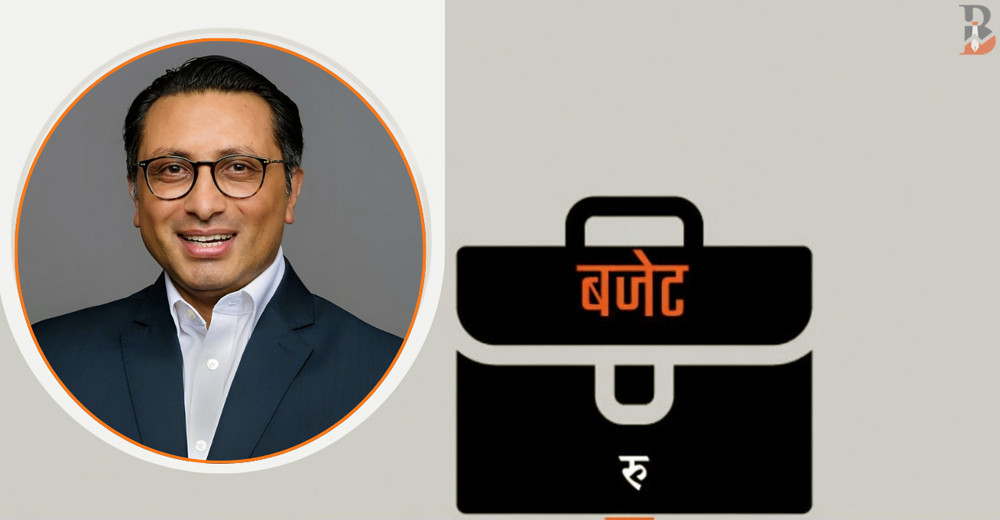
Kathmandu- As a high public expectations from the powerful government backed by nearly a two-thirds majority, the national budget for fiscal year 2026-27 is being unveiled on Friday.
As per the constitutional provision, Finance Minister Dr Swarnim Wagle is scheduled to present the budget at 4 PM on Jestha 15 during a joint session of the Federal Parliament.
The first budget introduced by the ruling Rastriya Swatantra Party-led government has attracted significant attention from political and economic circles.
The government is said to have prepared the budget based on the party’s pre election manifesto as its main roadmap. According to sources involved in the budget drafting process, the size of the budget is expected to increase significantly compared to the current fiscal year. Although a budget of Rs 1.964 trillion is currently under implementation for fiscal year 2025/26, Finance Minister Wagle is preparing to unveil a larger budget with several ambitious and long term programs.
However, the government’s financial condition remains under pressure. In the first 10 months of the current fiscal year, the government spent Rs 1.173 trillion. During the same period, it collected only Rs 1.012 trillion from revenue, foreign grants, and other income sources, created a deficit of around Rs 150 billion.
As revenue collection remained below the target, the government is likely to depend on domestic and foreign loans, along with grants, to manage resources.
Despite the pressure, sources say the government is preparing an aggressive development and reform oriented budget to address rising public expectations. Through the budget, the government is expected to announce long term goals of upgrading Nepal to a middle income country within the next 10 years and expanding the economy to USD 100 billion within seven years. These targets were also included in the Rastriya Swatantra Party’s election manifesto.
Finance Minister Wagle has already stated that good governance, economic restructuring, expansion of connectivity, investment in social sectors, and the promotion of Nepal’s soft power will be the five key priorities of the upcoming budget.
The government is also expected to place special emphasis on the information technology sector. Officials involved in budget preparation say a major package will be announced under the 'Digital Nepal' program. The government is preparing to declare information technology a 'national strategic industry' and encourage investment in software, artificial intelligence, and cloud services.
Similarly, the budget is expected to introduce programs related to remote work, allowing Nepali youth to work for foreign companies while staying in Nepal. Through the proposed 'Startup Nepal Portal,' businesses would be able to access company registration, tax exemptions, and seed funding through a single platform.
Reviving closed state owned enterprises has also been listed as a budget priority. However, due to limited resources, there are indications that social security allowances will not see major changes. Civil servant salaries, though, are likely to increase.
Administrative reform is also expected to be a key agenda in the budget. The government plans to introduce public service delivery based on the concept of 'online, not in line,' end political interference in state mechanisms, and abolish trade unions within the civil service. Policies aimed at keeping government employees completely separate from political activities are also expected to be included.
Based on the recently passed law on alternative development finance mobilization, the government is preparing to invite private sector investment in large infrastructure projects, including tunnel roads. The budget is expected to promote the private sector as a development partner in order to reduce delays caused by reliance solely on government resources for costly and long term projects.
The government is also expected to prioritize near completion projects. As of Wednesday, 8,310 projects had been entered into the Project Bank under the National Planning Commission. Of these, 404 projects have completed studies and are ready for implementation, while work is ongoing on 133 multi year projects.
In addition, 7,773 new projects with minimum cost estimates for study purposes have been entered into the Project Bank. The government is preparing to ensure funding for projects whose studies have already been completed.
To end the long criticized trend of last minute fiscal year spending, known locally as 'Asare development,' the government is preparing to implement a 'zero day procurement policy.' Under this policy, the tender process would begin from the first day of the new fiscal year. Authorities are also expected to require detailed project reports and land acquisition to be completed before the budget is approved.
The budget is also expected to include an 'Investment Express Policy,' which would guarantee all approvals for investors within 30 days.
On tax reform, the government is preparing several major announcements. Plans include bringing informal transactions into the tax net and increasing the income tax exemption threshold for middle and lower income earners. Currently, annual income up to Rs 500,000 for individuals and Rs 600,000 for couples is exempt from income tax.
The private sector, however, has been demanding that annual income up to at least Rs 1 million be exempt from taxation.
Meanwhile, the government is also preparing to launch a 'new phase of economic reform' through the budget. Following recommendations from the High Level Economic Reform Recommendation Commission, the government has already moved forward with the process of repealing 15 laws. According to sources at the Ministry of Finance, the budget will seek to institutionalize these reforms further.
© 2026 All right reserved to biznessnews.com | Site By : Sobij
© 2026 All right reserved to biznessnews.com | Site By : Sobij