
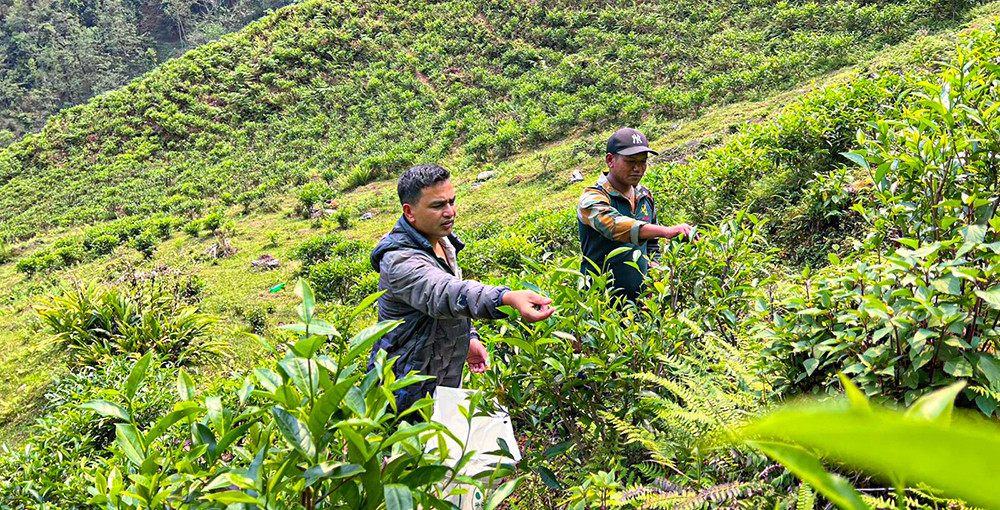
Kathmandu-Two months ago, India introduced a new requirement mandating comprehensive food safety testing for tea imported from Nepal. The rule has effectively halted exports of Nepal's orthodox tea, pushing the country's tea industry into a deepening crisis and threatening thousands of jobs. Since last week, tea factories across Nepal have begun announcing closures.
Tea producers and exporters say they have been forced to shut down operations because no meaningful effort has been made to resolve the issue. India has imposed similar barriers in the past, but those were usually addressed quickly through bilateral engagement. This time, however, the disruption has persisted for much longer, leaving tea entrepreneurs with little choice but to suspend production.
Nepal has so far failed to undertake any significant diplomatic initiative to remove the export barrier affecting Nepali tea.
Although Minister for Industry, Commerce and Supplies Gauri Kumari informed Parliament that diplomatic efforts were under way, officials familiar with the matter say no substantive discussions have yet taken place. According to them, Nepal has not been able to formally raise the issue with the relevant Indian authorities in a meaningful manner.
With Nepal currently lacking an ambassador in India, efforts at the bureaucratic level have received little attention from the Indian side. Officials say some Nepali representatives have informally raised concerns with their Indian counterparts, but the matter has not gained traction. The initiative at the official level has made virtually no progress.
According to officials, the Indian side is looking for engagement at the political level. Despite recent interactions with the Indian ambassador in Nepal, the issue has not received significant attention. Nor have political leaders from either side held substantive discussions on the matter.
'When the issue is raised, they say it can be discussed later, but no follow-up response comes afterward. That has been the pattern so far,' one official said.
Officials also say that efforts through diplomatic channels have produced little result because discussions at the commerce level have failed to gain momentum.
Although Nepal's Foreign Minister recently returned from an official visit to India, some observers believe bilateral relations have become increasingly strained and that the tea trade has become one of the casualties. They argue that the chances of resolving the issue remain slim unless it is addressed at the political level.
Relations between the two countries had already come under strain after Nepal introduced a rule limiting cross-border purchases from Indian markets to goods worth no more than Rs100. Tensions were further highlighted when a planned visit by India's Foreign Secretary and External Affairs Minister was cancelled after they were unable to secure a meeting with Nepal's Prime Minister.
India has also reportedly expressed concern over Foreign Minister Shishir Khanal's visit to China immediately after returning from India. Discussions had been under way regarding a visit to Nepal by senior Indian officials, but Khanal departed for China before those plans materialised.
These developments have led some observers to conclude that India remains cautious about Nepal's new government. They believe this has been reflected in the restrictions imposed on Nepali tea exports.
The crisis began after the Tea Board of India, from May 1, implemented a requirement that all Nepali tea undergo 100 percent testing under procedures applied to food products classified as high risk or placed in a 'red zone.' As a result, tea exports from Nepal to India came to a complete halt. After nearly 45 days without a resolution, producers have been pushed to the brink of suspending production altogether.
According to Shukra Dahal, General Secretary of the Nepal Tea Producers Association, Nepal's annual tea industry turnover, including both CTC and orthodox tea, is estimated at between Rs12 billion and Rs14 billion. Of this, tea exports to India account for around Rs5 billion annually. The sector provides employment to approximately 60,000 workers and staff and contributes about Rs1 billion in revenue to the government each year.
The association says that all 30 CTC tea factories under its umbrella are preparing to halt production. More than 500,000 kilograms of CTC tea have already accumulated in factories due to the export blockade.
The situation is equally severe for orthodox tea producers, with large volumes of tea remaining unsold in warehouses. India remains the primary market for both varieties, accounting for more than 90 percent of orthodox tea exports and over 60 percent of CTC tea exports, according to industry representatives.
Despite the scale of the crisis and its potential economic consequences, Nepal has yet to launch an effective diplomatic initiative to resolve the dispute.
© 2026 All right reserved to biznessnews.com | Site By : Sobij
© 2026 All right reserved to biznessnews.com | Site By : Sobij