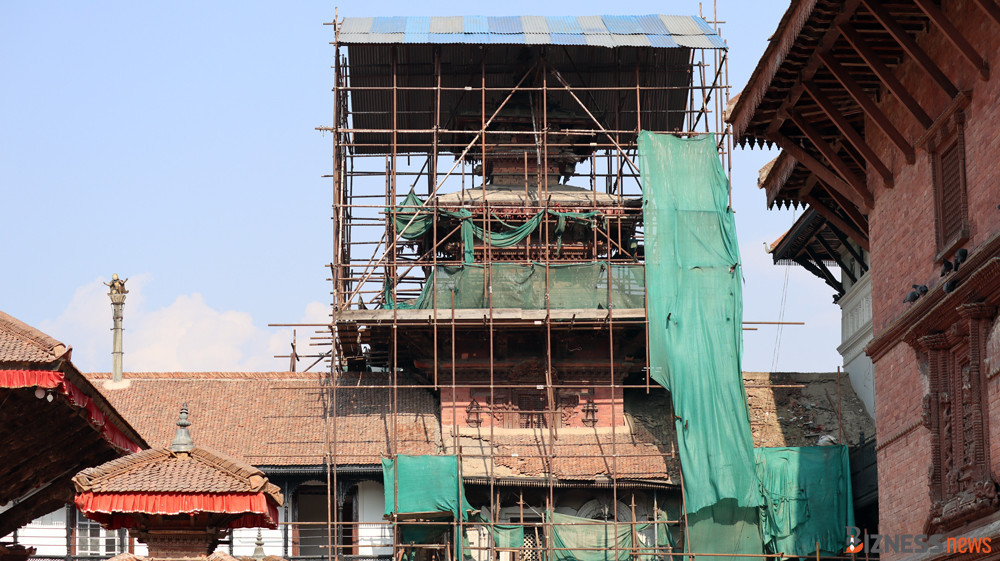
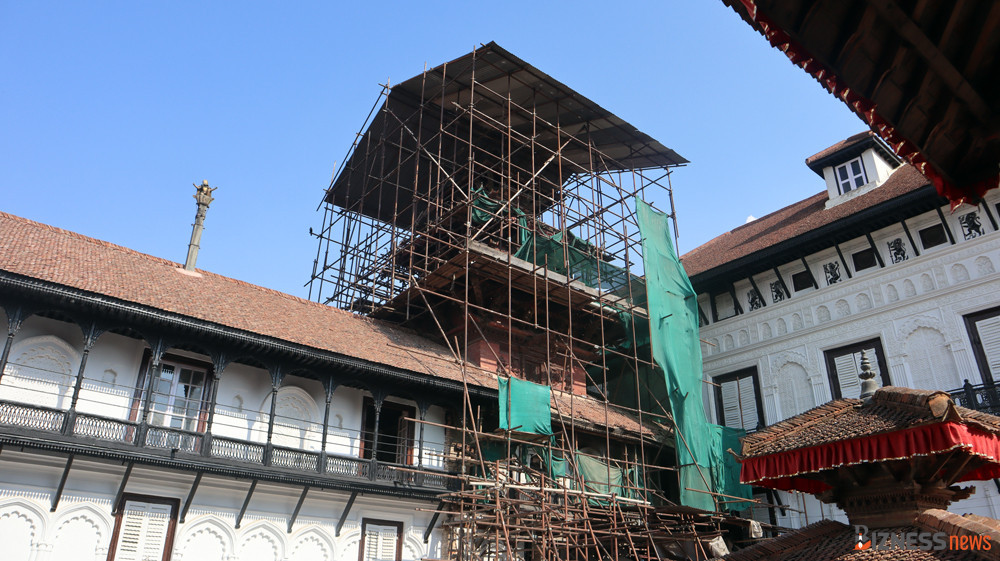
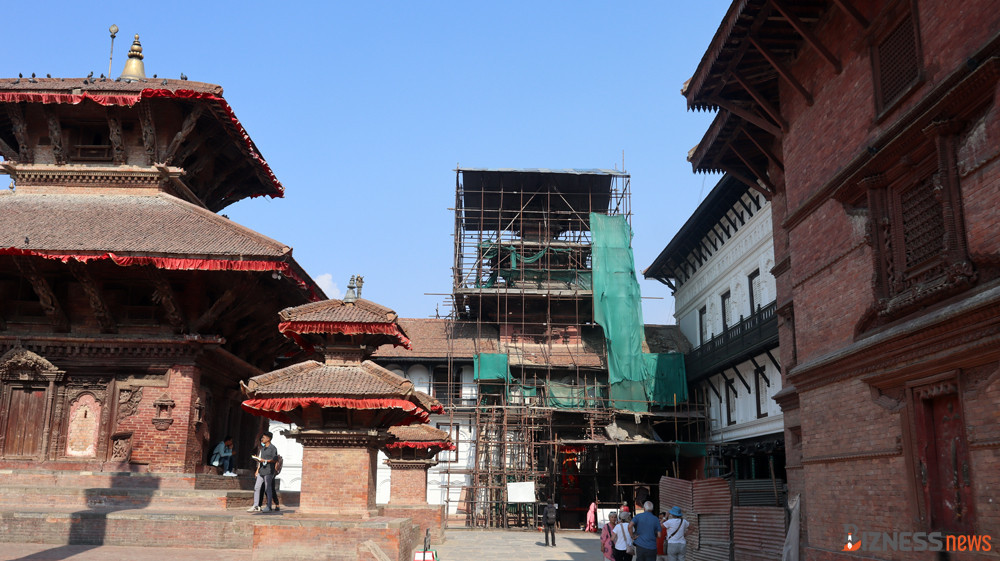
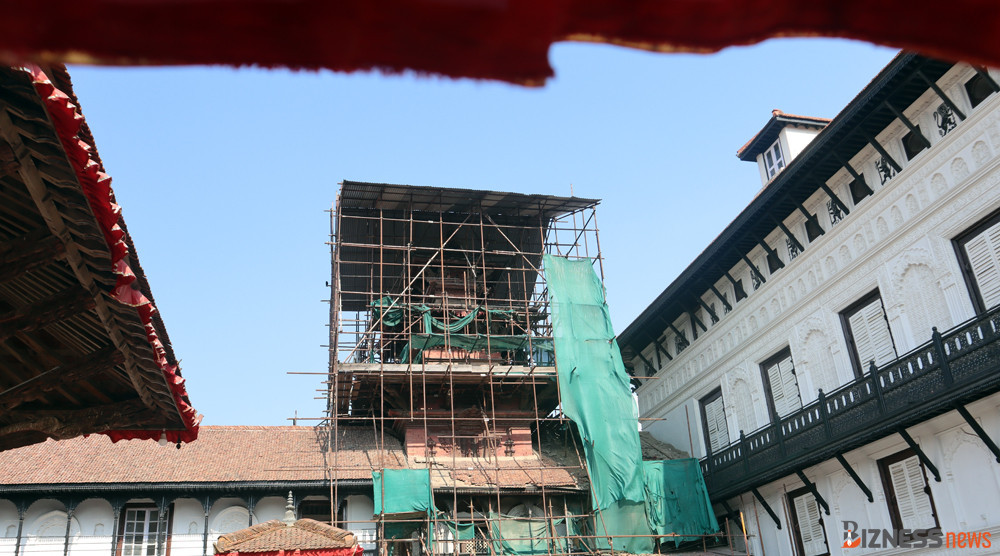
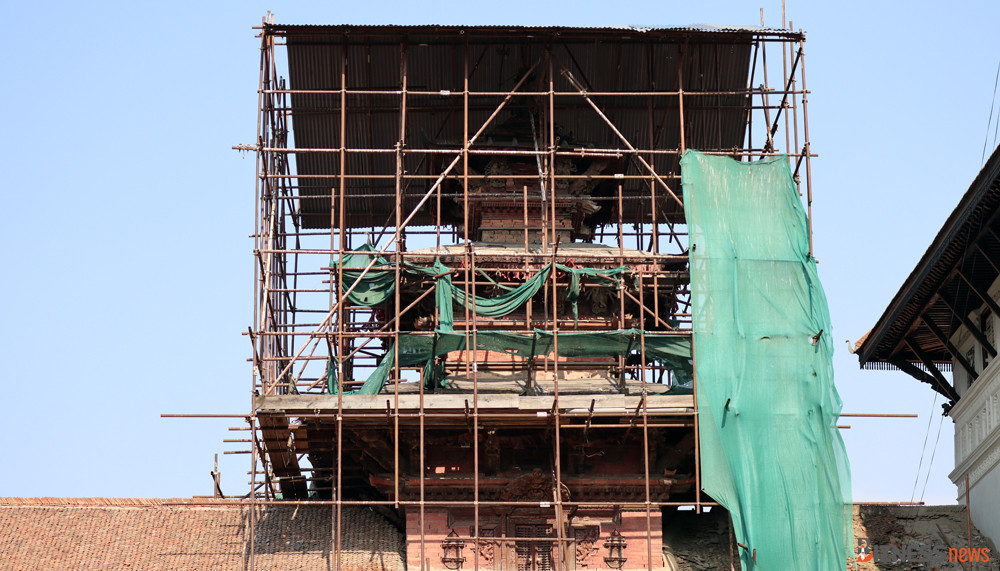
Kathmandu – The Agam Chhen Temple, where Malla kings once secretly worshipped their Agam deities, is finally set to undergo reconstruction—nearly a decade after it was severely damaged in the 2015 earthquake. Located in the Basantapur Durbar area, the temple is steeped in spiritual and historical significance.
According to the Department of Archaeology, the contract for reconstruction has been awarded to DR/Erisa/Grass JV for Rs 37.3 million, excluding VAT.
'There were some initial disputes, but with the contract now awarded, reconstruction will proceed in the original design and style,' says Chief Archaeological Officer Ram Bahadur Kunwar.
The department had initially handed the restoration work to a Japanese agency, but it faced resistance from local communities and heritage experts. They demanded that the sacred and culturally rich site be rebuilt using local craftsmanship and community participation.
After multiple rounds of discussion involving residents, Kathmandu Metropolitan City, and other concerned stakeholders, a consensus was reached: the temple would be reconstructed using traditional Nepali techniques—thus finally moving the project forward.
Situated beside the main entrance to Nasal Chowk within the Hanuman Dhoka complex, Agam Chhen suffered major structural damage during the earthquake.
The Japan International Cooperation Agency (JICA) had conducted a post-quake structural study.
The temple consists of a three-storey base structure topped by an additional three-storey pagoda-style shrine.
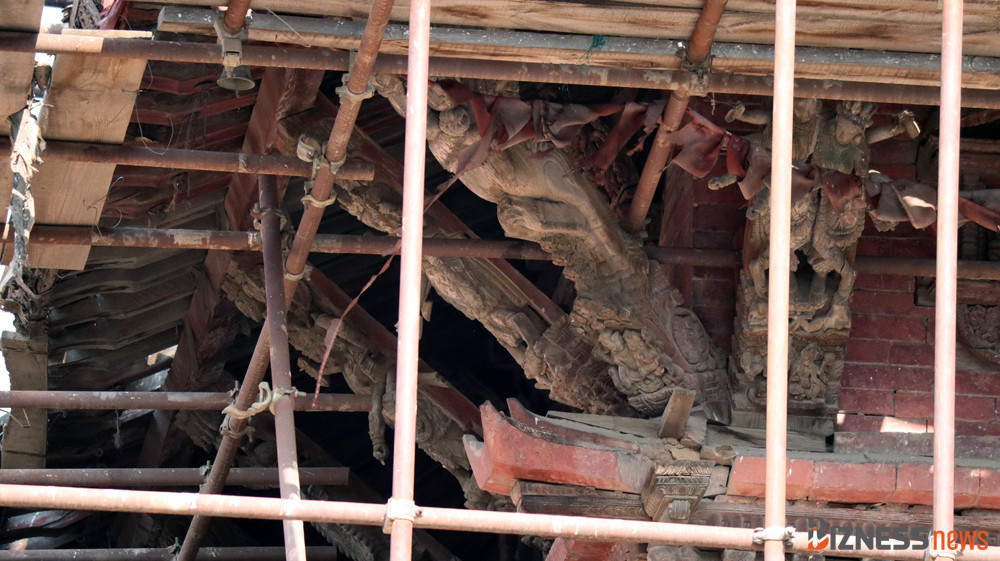
Excavations at four sites around the foundation showed good quality brick and mortar in three, while one section showed a 50 mm tilt, indicating structural risk. Cracked and partially dislodged walls further highlighted its fragile state.
Beyond its architecture, Agam Chhen holds layered histories of transformed deities, renamed shrines, and lost rituals.
After the rise of the Shah dynasty, the temple remained sealed for more than 250 years.When it was finally reopened for post-quake inspection, only a ceremonial sword was found inside.
The once-sacred interior—covered in dust—revealed eroded Vajrayana carvings. The deity's seat remained intact. While the outer lock opened easily, the inner latch had fallen into disuse.
A Shrine Even Shah Kings Never Entered
The temple was sealed in 1768 when Malla King Jayaprakash Malla fled Kathmandu during the conquest by Prithvi Narayan Shah.
Although Agam Chhen later came under the Narayanhiti Palace’s jurisdiction, it formally came under government control only after the monarchy was abolished.
The three-tiered pagoda, rising above a long verandah behind Hanuman’s statue in Basantapur, is the Agam Chhen temple.
It’s one of the three distinctive towers of Mohan Chok, which is believed to have been commissioned by King Pratap Malla—supporting the belief that Agam Chhen, too, was built under his patronage.
Artistry of Agam Chhen
Inside Agam Chhen is enshrined the secret Agam Devata (god) of the Malla kings.In Newar tradition, each lineage maintains a private Agam deity, worshipped in a separate sanctum or shrine.
Entry is strictly forbidden to outsiders, even to members of other lineages.
With the fall of the Malla dynasty, these ritual practices ended, and Agam Chhen remained closed ever since.
Gautam Vajra Bajracharya, a scholar based at Hanuman Dhoka Palace, informs that a small bell hanging at the eastern entrance bears an inscription stating it was donated in 1857 BS (1801 AD) by King Girvan Yuddha and Queen Suvarnaprabha Devi.
No other known inscriptions directly link to the temple’s history.
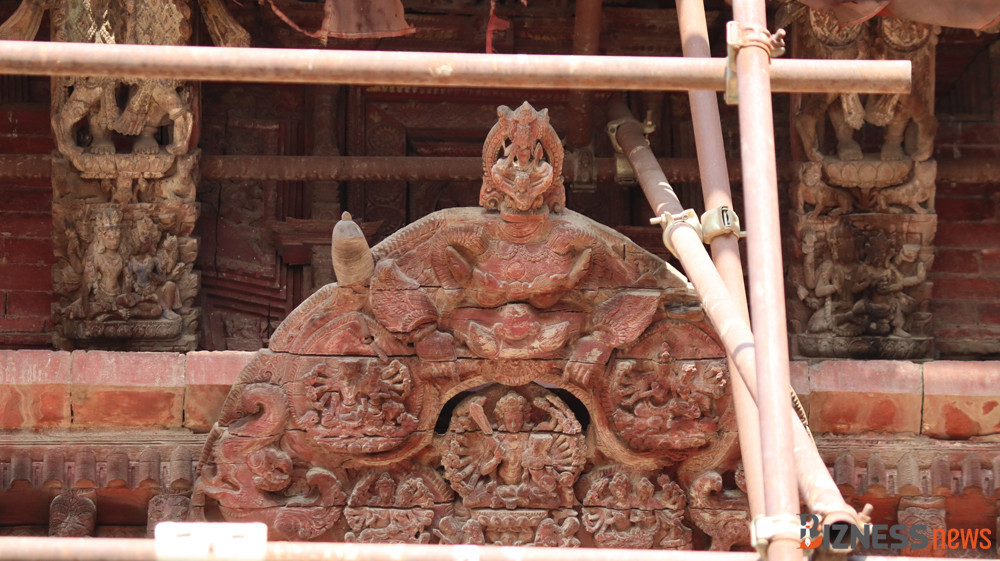
All four doors of the temple are adorned with intricately carved toranas—traditional Nepali temple arches.
Elegant yak-jhya (lattice windows) decorate the door frames. The southern and northern doors are partly obscured by long roof eaves, while the eastern door is covered by the roof of the Seesa Baithak in Nasal Chowk.
Only the western door, which faces the inner courtyard, is visible from afar.
Carvings of Shaivite deities grace the temple’s tundals (roof struts), and peacock-shaped wooden ornaments called kumpas adorn the corners of the roof. Beneath the roof, paired kunsals support the structure in all four directions.
The pinnacle (gajur) of the temple is especially distinctive. Unlike the typical vase-shaped kalash, this one is crafted in shikhara style, resembling a miniature metal shrine.
Inside the temple, a significant sacred mural still survives—a hidden gem of Nepal’s spiritual and artistic heritage.