Kathmandu – The automobile sector currently stands on the brink of massive transformation. Thanks to long-term vision and digitalization. There is no doubt that environmental, social, and governance standards are reshaping the automobile sector, and now data has become the 'fuel' of the future.
The Electric and Connected Era
The world is firmly stepping into the age of electric and connected cars. For leaders in the automobile sector, this is not only an opportunity to reposition their brands and companies but also to play an active role in shaping the future of transportation, not merely preparing for it.
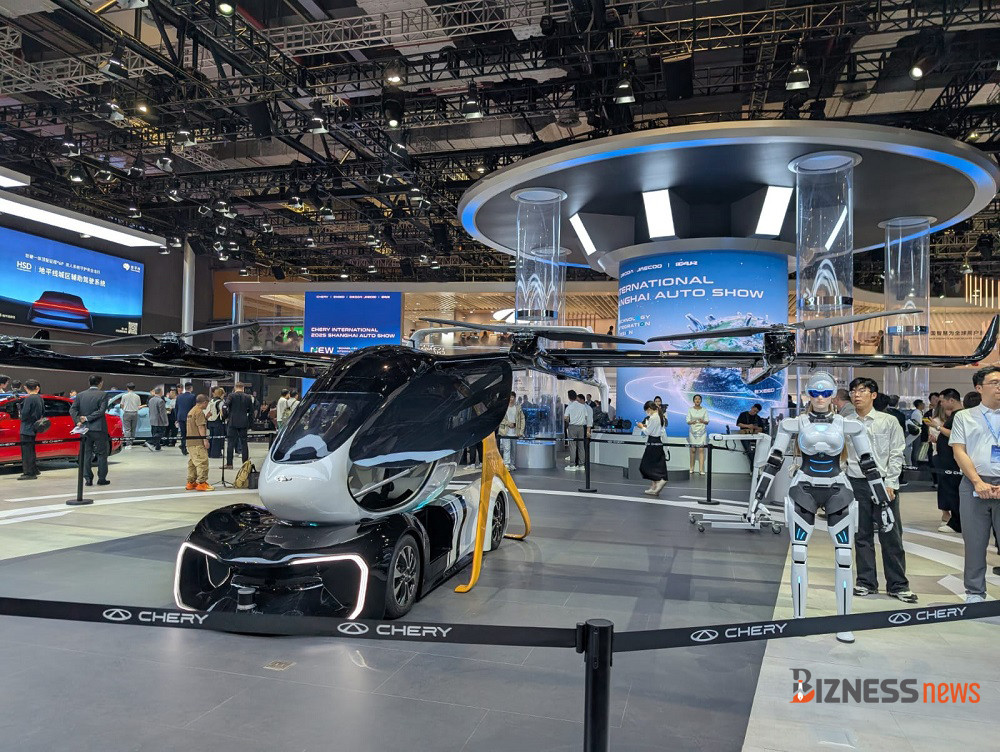
Vehicles are no longer just cars-they are increasingly taking shape as 'devices.' From cars and commercial vehicles to two-wheelers and even flying taxis, technology is driving the evolution forward.
Artificial Intelligence
AI technologies such as deep learning, machine learning, and computer vision have been identified as key forces shaping the future trends of the automotive industry through robotic automation applications.
AI guides autonomous cars, assists drivers with safety, manages fleets, and strengthens services like insurance and inspection. It also supports manufacturing by improving production rates, identifying inefficiencies, and reducing costs.
Chatbots further reduce human resource needs and enhance customer service. AI is transforming the way drivers interact with cars. Human-Machine Interfaces (HMI) now use voice-based feedback to manage and operate vehicles, making the driving experience both safer and more enjoyable.
The Electric Revolution
Electric vehicles (EVs) have already raised their flag in the global auto industry, and by the end of this year, they are expected to reach a new milestone. Estimates suggest that by 2025, 30 million EVs will be sold-making up 30% of total vehicle sales.
Several factors are driving this shift. Rising concerns over climate change and air pollution are pressuring governments to impose stricter emission laws. Zero emissions and lower operating costs are pushing the importance of EVs further, making them a long-term alternative to traditional internal combustion engines.
Advances in battery technology are addressing range anxiety, while growing charging infrastructure is making EVs a more practical and attractive choice. By 2030, global EV sales are projected to reach 70 million annually, about 60% of total vehicle sales.
The Rise of Autonomous Driving
While we may not yet see fully autonomous cars dominating every road this year, significant advancements in autonomous driving technology are expected by 2026. In 2025, Level 3 automation is likely to become common.
Level 3 systems allow cars to handle most driving tasks in specific conditions, though drivers must remain alert and ready to take control when needed. This technology brings a new level of convenience and safety, particularly for long highway journeys or stop-and-go traffic.
Additionally, automakers are introducing more advanced Driver Assistance Systems (ADAS), including automatic emergency braking, lane departure warnings, and enhanced adaptive cruise control.
According to Mordor Intelligence, the global autonomous car market will reach USD 47.84 billion in 2025 and expand to USD 133.32 billion by 2030.
Connected Cars and the Internet of Things
Cars are increasingly communicating with each other, transforming into rolling hubs of the Internet of Things (IoT). Connected cars stay seamlessly linked to the cloud, enabling real-time traffic updates, remote diagnostics, and personalized route planning.
Imagine a car automatically rerouting to avoid traffic jams or scheduling its own maintenance appointments when necessary.
Vehicle-to-Everything (V2X) communication will be a game-changer, allowing cars to interact with each other, traffic lights, and even pedestrians’ smartphones. This will improve traffic management and reduce accidents.
With 5G integration, cars will evolve into talking supercomputers-building wireless networks and interacting with real-time traffic infrastructure. By the end of 2025, IoT integration in vehicles is expected to be widespread, and the leap from 5G to 6G will make future capabilities even more advanced.
In-Car Personalization
This year, in-car experiences will become more personalized and interactive. Augmented Reality (AR) dashboards will project navigation, safety alerts, and live information directly onto the windshield. Drivers will see real-world road scenes enhanced with turn-by-turn instructions and hazard warnings-reducing stress and simplifying travel.
Biometric authentication will eliminate the need for physical keys. Drivers will be able to start cars with fingerprint, facial, or voice recognition. Advanced biometric sensors will identify drivers and passengers, automatically adjusting seat positions, mirror angles, and infotainment settings.
Car interiors will be designed for comfort and connectivity, featuring premium sound systems, high-speed internet access, and built-in streaming services. Vehicles will increasingly become an extension of drivers’ digital lives-seamlessly blending utility with entertainment.
Software-Defined Vehicles and Over-the-Air Updates
Cars are also evolving into software-defined vehicles (SDVs), relying more on software upgrades than hardware modifications for long-term performance. Everything from braking to driving to entertainment functions is software-driven.
For optimal performance and to keep pace with new innovations, software updates must be provided regularly. This trend will gain significant momentum in 2025, and in the next couple of years, software-defined features will become widely accessible.
Unlike traditional cars that face recall delays due to parts shortages, SDVs can be updated, modified, and enhanced remotely through Over-the-Air (OTA) updates-much like laptops or smartphones.
OTA updates will revolutionize the auto industry by fixing bugs, improving performance, and even adding new capabilities remotely. This will give older cars a seamless and personalized driving experience comparable to new models.
In the past, it often took years for new features to be introduced into vehicles. But with the rapid advancement of AI and human-driven research, automotive technology is now progressing at supercar speed. As a result, within just two to three years, we may see far more advanced features and innovations in vehicles than we currently imagine.