

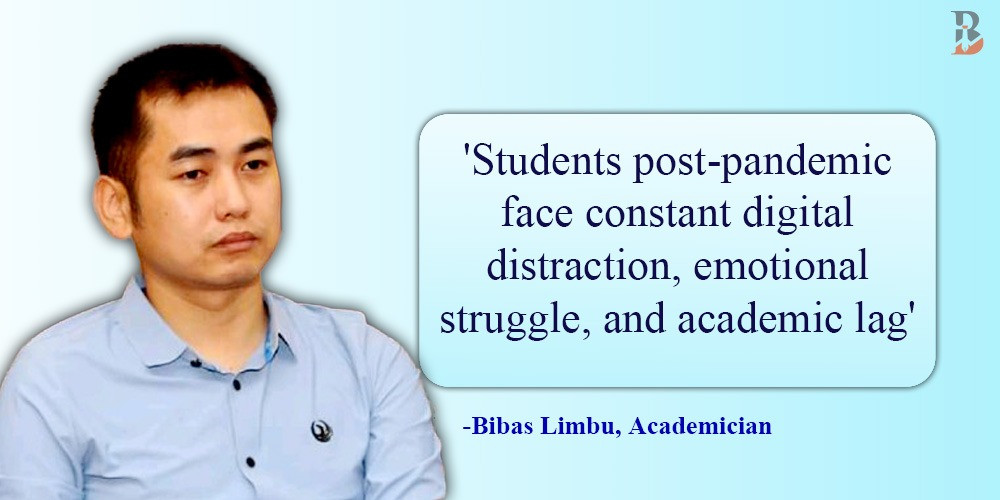
Education today has drastically changed and is not what it once was due to the rise of technology and, mostly, the disruption caused by the COVID-19 pandemic. Unlike past generations, students post-pandemic face constant digital distraction, emotional struggle, and academic lag, which disturb not only knowledge progression but also their social and emotional development.
The use of cell phones has become ubiquitous, the classroom is no exception. Smartphones have become more popular among today’s students than textbooks. Beneath the undeniable advantage of smartphones and the polished exterior of classrooms, lies a more complicated reality - one shaped by the pandemic, the new normal, and the needs of students that have evolved drastically.
It's indispensable to unmask the new set of challenges in education- compounded by the impact of the pandemic, exposing the effect of technology, mental health struggles, and the growing gap between what students need to know and what they are learning. These challenges have reshaped the way students learn, interact, and grow.
1. The Unforeseen Cost of Smart Phones in Classrooms
There is no debate that the presence of smartphones has a significant impact on the lives of people, students are no exception. Further, many see smartphones as tools for connecting and learning, their presence along with internet in the classrooms has sparked an ongoing debate.
Some hold the position that smartphones can offer students immediate access to data and information, educational resources, online collaboration tools, and more. Conversely, others hold that the students, often glued to their screens, are distracted- constantly leading them into the cycle of disengagement.
What warrants attention here is that it’s not just about the phones themselves, which many believe but how they contribute to a deeper, more complex set of problems.
A Detachment from Reality
One of the sweeping changes has been in how students interact with each other. Thus, the issue goes beyond mere distraction. The digital age, tied with the leisure time of the COVID pandemic, led students to spend the majority of their spare in front of the screens, fostering a growing dependence on technology forwarding a generation of students to find it increasingly difficult to engage with the real world.In-person interaction has become a lost art for many which is the basis of socialization.
This decline in socialization isn’t just a minor inconvenience leading to a generation less equipped in group work, managing conflict, building relationships, or engaging in meaningful conversation and beyond, a vital skill for both academics and professionals.
The early symptoms have been observed by the faculty, noting an increase in behavioral issues, including disrespect, lack of engagement, and social anxiety. Some students even report panic attacks and feel overwhelmed by the expectations placed on them.
Mental Health Strain
Another significant area of concern has been the mental health of students; indeed, the pandemic aggravated mental health challenges, with isolation caused by lockdown, combined with the overwhelming exposure to digital media, has created a perfect storm for a rise in anxiety, depression, sense of purposelessness and emotional distress.
Despite the advantages of technology, students are facing difficulty in coping with social and emotional pressure. As a result, students’ ability to focus, build resilience, and handle stress is being severely tested.
Facilitators, already overburdened by the demands of their profession, are enduring a generation of learners who are struggling academically, emotionally, and socially without adequate support or resources.
2.The Post-COVID Struggle: Immaturity in Higher Education
While the use of smartphones has surely contributed to the changing landscape of education, it is the comprehensive effects of the pandemic that have had the most profound impact.
As students transition to higher education, many are finding themselves ill-prepared-not just academically, but also emotionally and socially. The pandemic has certainly hindered the steady progression of learning, leaving students with gaps in foundational knowledge and skills.
The Learning Gap
A glaring aftermath of the pandemic is the gap in academic preparedness. For instance, in college, students are expected to have developed certain skills beforehand, such as how to study, focus on assignments, time management, work effectively in groups, etc.
All gratitude to the COVID-19 lockdown, unaccountable and inefficient stakeholders responsible for enhancing the quality of education coupled with a chaotic online learning environment (which only half of the students had the luxury, while the rest left out entirely); students missed critical parts of their education - especially in subjects that require hands-on practice and deeper conceptual understanding.
This gap is most apparent in high school students who were promoted to college with the knowledge, wisdom, and skills of someone several years younger. It’s a sobering reality that students who need to be ready for college-level assignments are instead struggling with the basic concepts.
The repercussions are experienced across the educational spectrum, from high school to college, where students are grappling with content they should have learned and become proficient years ago.
The Fallacy of Online Learning
For a few, the pivot to online learning may have seemed like a necessary adjustment. But for others it’s because someone did it, leading them to believe it's the only choice to be relevant. And for still more online classes was a distant hope, because of limited resources.
It’s not merely about the pivot to online learning but more about a disastrous transition - especially for students in rural or underserved communities who lacked proper devices and access to reliable internet.
The adaption of online education, largely driven by the need to accommodate the pandemic fitting as a foundational basis for students to progress to the next grade, has led to an uneven playing field. While private and urban schools may have relatively adapted well to the need, those in rural or marginalized areas have been left behind, widening the existing education gap.
Commercialization of Education
Another contributing factor to contemporary educational challenges is the commercialization of the education system. In the last decade, there has been a radical shift in the advancement of technology; further, the pandemic opened a new spectrum: online learning.
In the rush to capitalize on education, both in-person and online platforms have at times prioritized profit over quality learning experiences. In addition, many schools often inflate marks and offer extra classes which is more of a gimmick, aimed at impressing parents, who are seen as a primary source of income, rather than genuinely enhancing the quality of education or addressing students’ learning needs. This has disrupted progressive learning and given a misleading impression, making it seem like students are receiving a superior education when in reality, the focus is more on mere revenue generation than on meaningful learning outcomes.
3. Reimagining Education: Moving Beyond the Surface
Whether it be a post-effect of COVID, commercialization of education, generational shift, or other factors, the message of the need for change is clear. Education must evolve, but not just in terms of technology or marketing gimmicks-it must address the broader, deeper needs and wants of the students.
It’s indispensable that education must become environments that nurture not only intellectual growth but also emotional resilience, work ethics, critical thinking, discipline, and social intelligence-qualities that are often overlooked in favor of standardized test scores and grades.
Building Resilience and Purpose
Education should evolve, building on each grade level and providing a strong foundation for continuous learning for future readiness. As we unmask the realities of modern education, it is pertinent to ask: What do students need to truly succeed in today’s world? How the dynamics of students have changed post-COVID coupled with a radical advancement in technology? It’s not only about the test scores or academic knowledge.
The ability to adapt, engage meaning fully, think critically, and have personal goals-skills that will help students not just survive but thrive in an ever-changing world.
A Progressive Learning
Education should be progressive-building on prior knowledge and having broader social and political implications preparing students for real-world challenges. Yet, the pandemic and digital distractions have disrupted this natural progression.
Students who missed vital years of learning are now amusing themselves with catch-up, trying to fill the gaps that should have been addressed earlier. There is no denying that the education system fell short in delivering on its promises amid the pandemic.
The hard pill to swallow is the fact that no concrete action plan was put in place after the pandemic by the concerned authorities to make up lost time and learning.
4. Conclusion: The Future of Education
There has been a radical transformation in the landscape of education, and it continues to evolve even now. Opportunities exist to reshape the system, but it requires a shift in how we view both learning and teaching.
As we uncover the current state of education, we must acknowledge the effect of the learning gap caused by the pandemic and the rise of digital distractions. Put differently we must recognize the challenges-while endorsing the potential for growth, change, and progress.
Doing so is not without its challenges-from the need for substantial resources, including well-trained educators, and access to a wide range of learning materials and experiences to significant changes in curriculum design, and assessment methods to overall educational culture.
It is essential to strike a balance between technology, student-led exploration, and the acquisition of fundamental knowledge and skills incorporated with emotional and social learning. This enables us to create an environment where students are not only prepared academically but are also ready to face the world with purpose, resilience, and a sense of community.
(Limbu is an emerging academic professional, currently associated as the Program-Coordinator for the BBM program at Trinity International College.)
© 2026 All right reserved to biznessnews.com | Site By : Sobij
© 2026 All right reserved to biznessnews.com | Site By : Sobij