
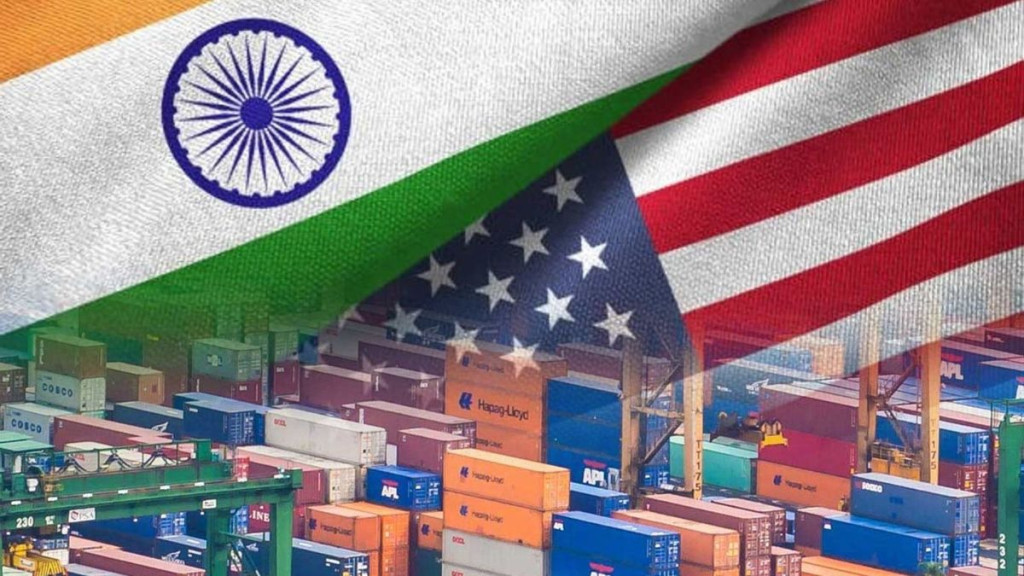
Kathmandu-The trade agreement between India and the United States, expected to be fully implemented after its signing in March.
This agreement is likely to have a partial but notable impact on Nepal’s economy and business sector.
Some provisions of the agreement between India, Nepal’s largest trading partner, and the United States could directly affect Nepal’s export sector.
In particular, the agreement includes zero customs duties or significant tariff reductions on certain agricultural products.
Under this arrangement, India will provide zero customs duty or substantial concessions on soybean oil imported from the United States. Indian Commerce Minister Piyush Goyal has already announced customs concessions on soybean oil.
If customs duties on oil imported from the United States to India are reduced or eliminated, it could significantly alter trade flows. While exports from North American countries may be directly affected, Nepal also faces potential risks.
So far, India has not issued clear operational guidelines, although it is believed that the concessions may be quota-based. If soybean oil from the United States enters India at zero customs duty, Nepal’s soybean oil exports could decline.
Soybean oil accounts for 39 percent of Nepal’s total exports. Of Nepal’s total exports worth Rs 142 billion, Rs 56 billion comes from soybean oil alone. Nepal imports approximately Rs 57 billion worth of crude soybean oil and exports about Rs 56 billion in refined soybean oil.
Nepali businesses import crude soybean oil primarily from North American countries, refine it domestically, and export it to India under preferential trade arrangements. They benefit from the zero-tariff facility provided under the South Asian Free Trade Area (SAFTA). While India imposes a 36 percent customs duty on refined oil from most other countries, exports from Nepal currently enjoy zero customs duty.
If only crude oil from the United States receives zero-duty access, and quotas are applied, the impact on Nepal’s exports may be limited. However, if refined soybean oil from the United States is also granted zero customs duty, Nepal’s exports could face serious challenges.
Another factor is India’s commitment to import goods worth $500 billion annually from the United States. Edible oil imports may be prioritized to help meet this target.
Trade expert Ravi Shankar Saiju warns that this trade structure is inherently vulnerable. 'If refined oil from the United States enters at zero customs duty, it will be cheaper than Nepal’s,even under a quota system. In that case, our exports could fall significantly,' he says.
© 2026 All right reserved to biznessnews.com | Site By : Sobij
© 2026 All right reserved to biznessnews.com | Site By : Sobij