Kathmandu- Disagreements between the ruling Nepali Congress and CPN-UML over power-sharing have delayed the appointment of a new governor of Nepal Rastra Bank (NRB).
According to the NRB Act, a new governor should be appointed at least one month before the incumbent’s retirement. However, political wrangling has prevented this.
Governor Maha Prasad Adhikari’s term ended on April 4, yet the cabinet has failed to address the appointment. Instead, the government named Senior Deputy Governor Neelam Dhungana as acting governor—a move that has raised questions about the government’s intent.
Concerns are mounting that political and personal interests are taking precedence over appointing a competent, neutral candidate capable of addressing the deepening issues in the banking system. There is fear that the appointment could repeat the controversy seen in the Nepal Insurance Board, where Sharad Ojha was appointed based on falsified qualifications and amended eligibility criteria.
Recently, the age limit for governor candidacy was removed. While the Finance Ministry claims this aligns with the NRB Act, which does not specify an age threshold, the timing of the amendment has drawn criticism.
A recommendation committee—led by Finance Minister Bishnu Prasad Paudel and including economist Bishwanath Paudel and former Governor Bijay Nath Bhattarai—has yet to submit names for consideration. Meanwhile, lobbying has intensified within political parties and business circles.
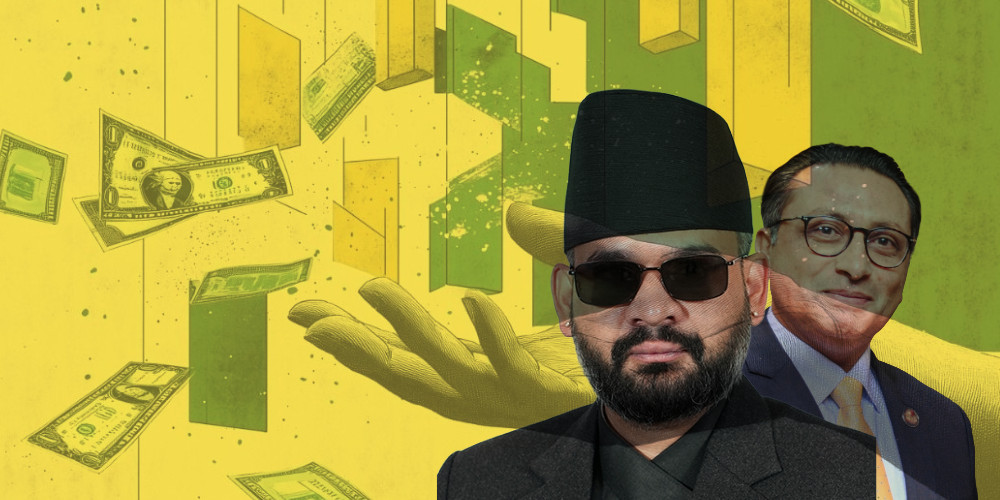
Prime Minister KP Sharma Oli reportedly favors appointing Prabhu Bank CEO Ashok Sherchan, while Finance Minister Paudel and Shankar Pokharel back Dr. Prakash Shrestha. Some eastern region leaders from Congress and UML, along with business groups, are pushing for Deputy Governor Neelam Dhungana. Congress President Sher Bahadur Deuba and Foreign Minister Arzu Rana reportedly support either Dr. Gunakar Bhatta or NRB board member Rabindra Pandey.
Gyanendra Dhungana, who left Nabil Bank to pursue the role, appears to be out of contention after losing the backing of influential figures like Binod Chaudhary. Former Chief Secretary Rajendra Kishor Chhetri is also being considered by some business groups.
Amid this political tug-of-war, Nepal’s banking sector is facing severe stress. Non-performing loans (NPLs) are rising sharply, averaging 5 percent across banks and reaching 7–10 percent in some commercial banks. Over-financing, misuse of refinancing and concessional loans, and loan restructuring have compounded the issue.
Many of the loans extended during the COVID-19 recovery period were funneled into non-productive sectors like vehicle purchases, real estate, and stocks, weakening the capital base of banks. Banks now lack sufficient capital for new lending and are struggling with loan recovery. Collateral auctions have stalled, non-banking assets are increasing, and the number of blacklisted borrowers is rising.
As provisioning for loan losses increases, bank profits have declined, and distributable profits have turned negative. Many banks have failed to issue dividends for two consecutive years, prompting founding investors to exit. Some banks are even facing issues with debenture redemptions due to profit shortfalls.
If unchecked, these trends could destabilize the financial system. According to a commerical bank CEO seeking anonymity shared, ' loan misuse, refinancing, and poor supervision during the pandemic have created intense pressure on recoveries, a problem expected to exacerbate this fiscal year.'
To restore stability, NRB needs strong leadership. The next governor must be capable of reducing bad loans, liquidating non-performing assets, and enforcing reforms. Several banks and financial institutions are already in crisis, with capital adequacy ratios turning negative. NRB has yet to declare these institutions as problematic, further risking depositor confidence.
The government must support NRB during budget planning and appoint a governor who can ensure coordination between fiscal and monetary policy. The new leader should maintain external sector balance, control inflation, and boost credit to support economic growth.
Rather than choosing someone aligned with a political party or corporate house, Nepal needs a capable, impartial governor who can preserve NRB’s autonomy, guide financial sector reforms, and remove the country from the Financial Action Task Force (FATF)’s grey list.
Ideally, the government should appoint an experienced professional from within NRB—someone familiar with monetary policy, regulation, and supervision, and able to protect foreign reserves and ensure macroeconomic stability, as demonstrated during Governor Adhikari’s tenure.