
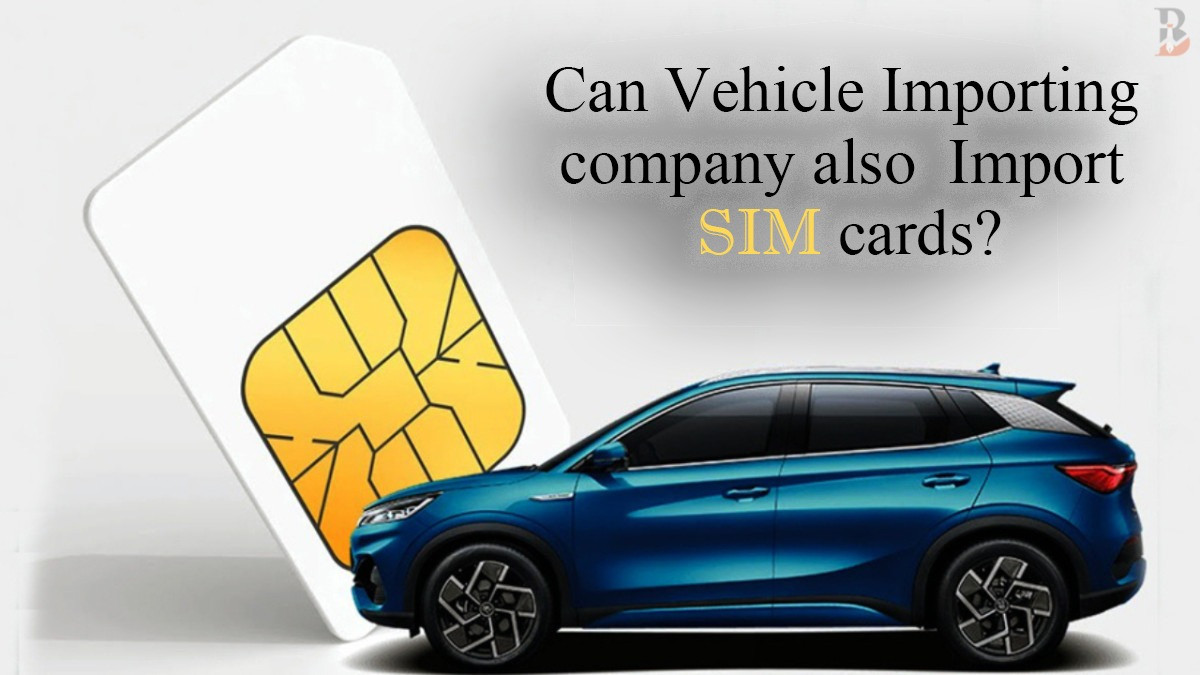
Kathmandu- A suspicious incident has emerged involving a vehicle-importing company importing SIM cards.
Cimex Inc., the official distributor of Chinese electric vehicle brand BYD in Nepal, has reportedly imported dozens of SIM cards.
Under Nepali law and practice, only telecommunications service providers are allowed to import SIM cards.
This raises serious questions about how and why Cimex Inc., an automobile distributor company, imported SIM cards.
According to documents reviewed by Biznessnews, Cimex had imported 50 SIM cards from China.
The invoice issued by BYD (HK) Limited to Cimex Inc. on April 29, 2025, shows that each SIM card was purchased for 2,300 Chinese Yuan.
No SIM card previously imported into Nepal has ever been valued this high.
Generally, the average import cost of a SIM card, including tax, is around Rs 60 to 70, according to customs data.
However, at the mentioned exchange rate of 19.14, Cimex paid Rs 44,022 per SIM card.
Including insurance, freight, and all taxes, the final landed cost in Nepal stood at Rs 58,587 per SIM card.
The import documents show the SIM cards were categorized under customs subheading 8523.52.10, which is specifically designated for telecom SIM cards.
According to Nepali customs regulations, SIM cards imported for telecom use are exempt from customs duty, but are subject to 10 percent excise and 13 percent VAT. Cimex’s import was processed under the same classification.
This has raised serious questions: Why and for what purpose did a car importing company bring in SIM cards?
Government bodies are even in a dilemma on whether such a company is allowed to import SIM cards.
The Nepal Telecommunications Authority (NTA) stated that only telecom service providers are legally authorized to import SIM cards, while the customs department said the matter is unclear.
The Rasuwa customs office confirmed that Cimex Inc. did not submit any official authorization documents from the NTA or telecom operators like Nepal Telecom or Ncell.
A customs official seeking anonymity admitted, 'They (Cimex ) claimed they were importing SIM cards, and we were unsure whether prior approval was necessary. After checking with telecom companies, who also said the matter was unclear, we cleared the goods under the SIM card category.'
NTA spokesperson Min Prasad Aryal, however, claimed that only telecom operators and satellite service providers are allowed to import SIM cards.
'In Nepal, only telecom companies and satellite operators are entitled under our regulations to bring in SIM cards. There’s no other legal channel for this. If SIMs are brought in for roaming, that too falls under the telecom operator’s jurisdiction,” Aryal stated.
Cimex Inc. did not provide any clarification to customs regarding the purpose of the imported SIM cards.
Customs officials say the company neither submitted usage details nor showed any license for importing SIMs.
Some BYD vehicles do use Subscriber Identity Module (SIM) cards—for internet connectivity and remote vehicle management features, such as remote control via apps, over-the-air updates, and monitoring charging status.
However, it's still unclear whether the imported SIM cards are for these uses or something else.
Several urgent questions have emerged following Cimex's import of SIM cards.
First and foremost, is Cimex legally allowed to import SIM cards at all? If such imports are permitted, under what legal framework do they fall, and for what specific purpose are they authorized?
If these SIM cards are intended for roaming, it remains unclear how long foreign SIMs can be legally operated within Nepal.
Additionally, can a private company import roaming SIMs for commercial use, or does that violate existing telecommunications regulations?
Taxation is another concern—would roaming-related charges be subject to the same VAT and excise duties as locally imported SIM cards?
Data security also becomes a critical issue, particularly if foreign SIMs are used in the long term, raising concerns about how user data is managed and protected.
Lastly, it must be clarified whether these SIM cards are being used for telecommunications services such as voice and data, or simply for GPS and remote vehicle functionalities.
Another major concern is whether Cimex, a vehicle distributor, is also acting as a telecom service provider or a dealer for a Chinese telecom company.
If these imported items turn out to be something other than SIM cards—misdeclared under the SIM category—this could lead to even greater complications, as other devices are taxed differently.
© 2026 All right reserved to biznessnews.com | Site By : Sobij
© 2026 All right reserved to biznessnews.com | Site By : Sobij