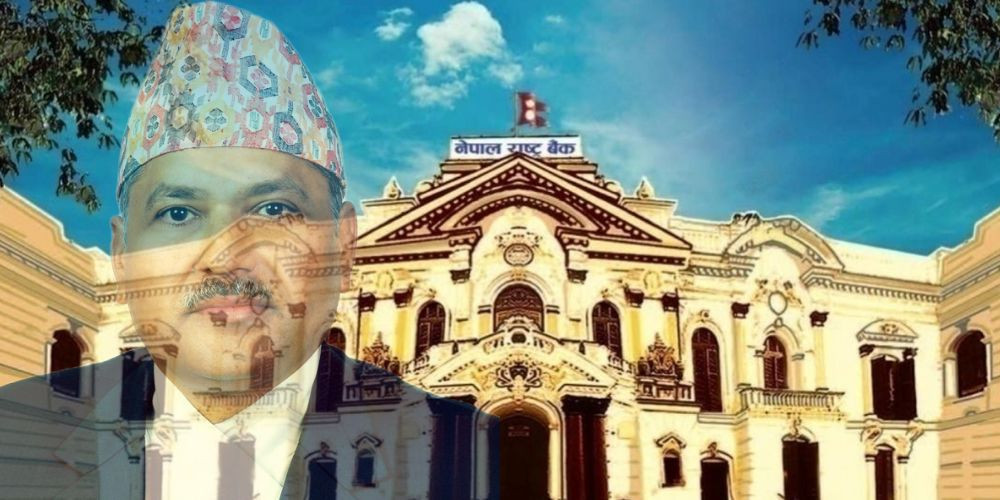
Kathmandu-Governor Maha Prasad Adhikari had officially completed his five-year term at Nepal Rastra Bank last Friday, drawing attention to his successor’s appointment.
During his farewell, Adhikari highlighted several achievements under his leadership, including stable foreign exchange reserves, adequate liquidity in the banking system, and low interest rates. He emphasized reforms made to ensure fair deposit interest rates and even launched a report documenting his tenure.
Adhikari was emotional on that day, accusing the then-government and finance minister of undermining the central bank’s autonomy by attempting to remove him while he was working to balance foreign reserves, inflation, and external stability.
Although he claimed success in introducing modern monetary tools and payment systems, Adhikari remained notably silent on the stock market.
His first monetary policy had initially boosted investor enthusiasm, pushing NEPSE to an all-time high. However, allegations of credit misuse in luxury sectors prompted him to tighten stock lending regulations.
Under his policy, a household could borrow up to Rs 40 million from one bank and up to Rs 120 million across the banking system for stock investments.
Despite pressure from various political leaders, including Prime Ministers Pushpa Kamal Dahal, Sher Bahadur Deuba, and KP Sharma Oli, Adhikari resisted fully lifting the lending cap, instead opting for gradual relaxation. The cap was later modified to Rs 150 million crore for individuals and Rs 200 million for institutions.
In the latest monetary policy, Adhikari removed the institutional lending cap but increased the risk weight of large stock loans from 100 percent to 150 percent, while slightly reducing it for smaller loans.
Adhikari consistently advocated promoting margin trading and discouraging direct stock lending from banks but failed to implement these changes effectively. His Covid-era monetary measures provided liquidity relief and spurred market growth, but investors often criticized him for market interventions.
Further, his close regulation of institutional investors like banks, insurance companies, and mutual funds was blamed for weakening market sentiment. Restrictions on institutional stock transactions led to instability, frustrating many investors.
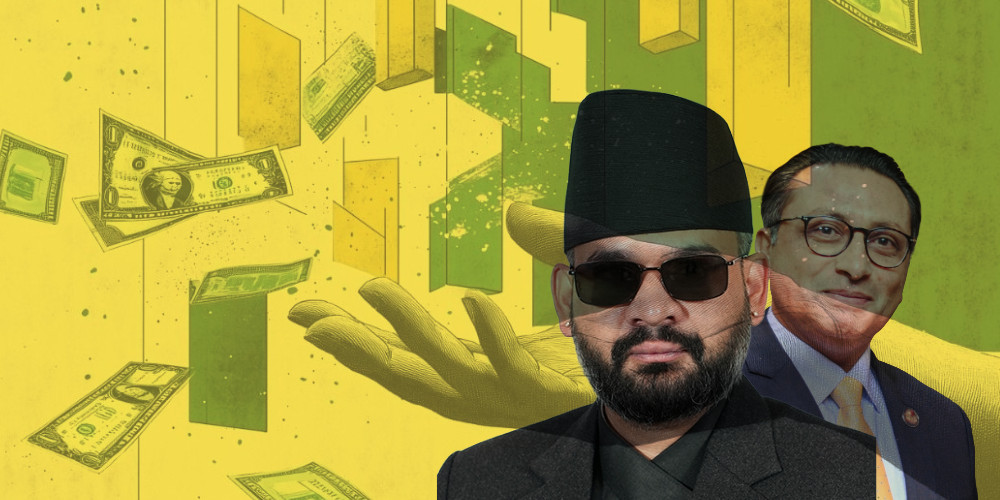
Now, with Adhikari's departure, Finance Minister Bishnu Prasad Paudel is leading a recommendation committee comprising economist Dr. Bishwanath Paudel and former governor Bijay Nath Bhattarai to shortlist candidates for the new governor. The government will appoint the new governor based on their recommendations.
Stock investors are watching closely, hoping for a new governor who adopts a more market-friendly stance. They want monetary policies that support — rather than disrupt — the stock market, effective regulation of licensed institutions, and a broader allocation of credit to the market (3–5 percent of total loans).
Amid the governor transition, the stock market showed signs of recovery last week, rising by 40.08 points overall. Although fluctuations continued, analysts believe improving investor sentiment could drive further gains this week.