
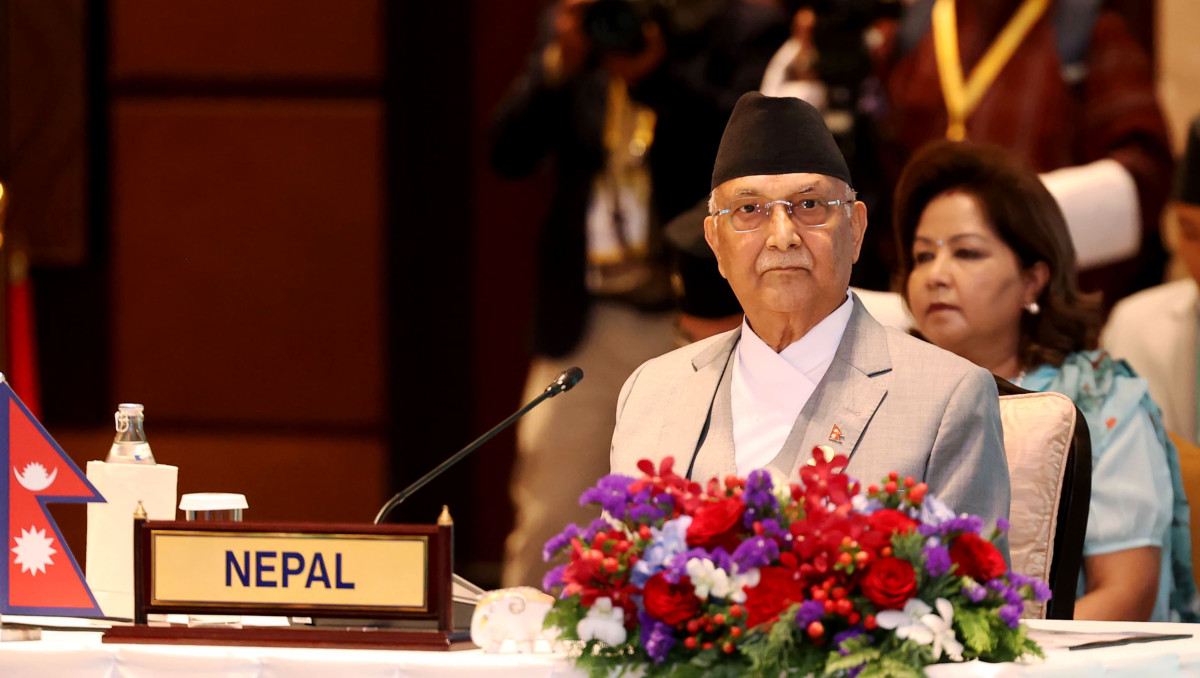
It is both a privilege and an honor for me to address this august BIMSTEC Summit in Bangkok today. I bring with me a message from thirty million Nepali people for the success of this Summit and for everlasting peace, well-being, and prosperity of the people of BIMSTEC Member States.
At the outset, I would like to extend, on behalf of the Government and people of Nepal as well as on my own, our sincere condolences and sympathy to the Governments and people of Myanmar and Thailand for the loss of precious lives and property due to devastating earthquakes. We pray and wish for the quick recovery of the injured. At this hour of grief, the Nepali people stand in strong solidarity with Myanmar and Thailand.
Appreciation and Acknowledgements express my profound appreciation and gratitude to Madam Prime Minister Paetongtarn Shinawatra and the Government of Thailand for the warm hospitality and excellent arrangements made for the Summit. I applaud Chair Thailand for steering the BIMSTEC process with vigor and vision over the past three years. We extend our best wishes and assure strong support to our friendly neighbor, Bangladesh, as the next Chair of BIMSTEC.
His Excellency the Secretary-General and his team deserve our sincere appreciation for their dedicated and professional contributions.
Excellencies, Distinguished Delegates,
Over two decades have passed since the seed of BIMSTEC was sown in this very city. In these two decades, we have witnessed profound change and transformation in the Bay of Bengal region and beyond. The Bay of Bengal has emerged as one of the fastest-growing regions in the global economic landscape. Yet, challenges persist. And the quest for peace and prosperity continues. We live in a world rife with compounding challenges—economic disparities, environmental vulnerabilities, and political uncertainties. The global order is being redefined.
At this defining moment, BIMSTEC must not only navigate the changing tides but also seize the opportunity to reinvigorate our regional cooperation. The theme of this Summit—“Prosperous, Resilient and Open BIMSTEC'—provides us with a compass that is pro-people, pro-prosperity, and pro-welfare.
BIMSTEC exemplifies a unique collaboration between two dynamic regions—South Asia and Southeast Asia. As a unique bridge, it embodies the collective aspirations of over 1.8 billion people striving for a prosperous, resilient, and open BIMSTEC. Prosperity, resilience, and openness are not just slogans—they are a call to action.
While the region shows impressive growth, many people are still confronting the common enemy of poverty. In this context, prosperity is not an option; it is an obligation. The BIMSTEC region is richly endowed with natural resources, cultural diversity, and a youthful workforce. From the majestic Himalayas to the Bay of Bengal's vibrant coastlines, we are blessed with abundant potential. To unlock this potential, we must act strategically and sustainably. Investing in human capital is non-negotiable. The Fourth BIMSTEC Summit in Kathmandu emphasized regional cooperation in education, skills development, and capacity-building.
Connectivity of markets and minds, infrastructure and ideas, culture and cyberspace—these are the backbones of growth. The implementation of the BIMSTEC Master Plan for Transport Connectivity and the BIMSTEC Agreement on Maritime Transport Cooperation in a time-bound manner will be key.
It is concerning that intra-regional trade in BIMSTEC remains a mere 5 percent—far lower than ASEAN, the EU, or NAFTA. Our region is among the least integrated globally, barring natural interconnections among our societies, economies, and nations. This must change. We must build an integrated Bay of Bengal region to unlock our potential and capitalize on our complementarities. Recognizing that not all economies in our region are equal, we must extend preferential support to Member States with special needs to enable them to share in common prosperity.
Today, the world stands at a crossroads. We have seen uncertainties stemming from multiple domains: ecology, economy, trade tensions, technological disruptions, climate change, conflicts, pandemics, and polarization. In such a world, resilience is our strongest defense—our antidote to despair and our road to robustness.
Climate change poses an existential threat to all of humanity. For Nepal, the stakes are even higher. Our high Himalayas are the perennial water towers and cooling stations of Asia. These mountains act as global heat sinks, yet they suffer disproportionately despite our negligible emissions. The impacts extend beyond the mountains to downstream lowlands and coastal areas. To raise awareness of the link between mountains and oceans, Nepal is organizing the first edition of Sagarmatha Sambaad this May, and I look forward to seeing many of you there.
Across the region, sea levels are rising, and tropical storms are becoming more intense. The BIMSTEC region faces a range of extreme weather events—glacial floods, cyclones, heatwaves, and droughts. These challenges are not distant; they affect our daily lives. We must act decisively with a “whole of the region' and “whole of the world' approach. Regional energy cooperation, cross-border energy grids, renewable energy—particularly hydropower—must be prioritized.
We must also build resilience against trade tensions, supply chain disruptions, and technological shifts. This calls for domestic readiness and regional cooperation. Disaster preparedness, public health systems, and inclusive economic policies must remain at the core of our agenda. Social harmony and a strong sense of community must be promoted. People-centric development must be integrated with SDGs in our national and regional frameworks.
A vibrant and dynamic BIMSTEC requires openness as its foundation. A comprehensive democracy that addresses political, economic, ecological, and cultural concerns is essential for long-term stability. We must enhance people-to-people connectivity through tourism, cultural exchange, educational links, and cross-border investments. A visa-on-arrival policy within BIMSTEC could be a game-changer. Digital integration to boost e-commerce, cross-border payments, and e-governance must be prioritized. We must invest in research and development to innovate and tackle shared challenges such as climate change, food security, and technology-driven economic shifts.
The BIMSTEC Bangkok Vision 2030, which we are adopting today, serves as a blueprint for our shared future. It is our collective responsibility to ensure that no BIMSTEC nation is left behind. Nepal remains deeply committed to the BIMSTEC Charter and the principles it upholds. We take immense pride in leading the People-to-People Contact Sector and look forward to deeper partnerships across priority areas.
As we stand at this historic crossroads, let us reaffirm our commitment to transforming the Bay of Bengal into a prosperous, resilient, and open region. In a world where the global order is in flux, our strength lies in unity, and our future shines in solidarity and collaboration. We are in a race against time. The future belongs to those who act with urgency and vision.
Let me conclude with the wise words of Nepal’s enlightened son, Lord Buddha: “However many holy words you read, however many you speak, what good will they do you if you do not act upon them?'
Therefore, let us act on our words—To build a BIMSTEC that delivers—for our people and for generations to come. To transform our region into a dynamic hub of prosperity, resilience, and openness
(This is an edited version of KP Sharma Oli's speech at the BIMSTEC Summit )
© 2026 All right reserved to biznessnews.com | Site By : Sobij
© 2026 All right reserved to biznessnews.com | Site By : Sobij